November 24, 2025
Congratulations! You’ve Adopted a Rabbit.
Learn essential care tips for your newly adopted rabbit, including housing, nutrition, enrichment, and vet guidance for a happy, healthy companion.
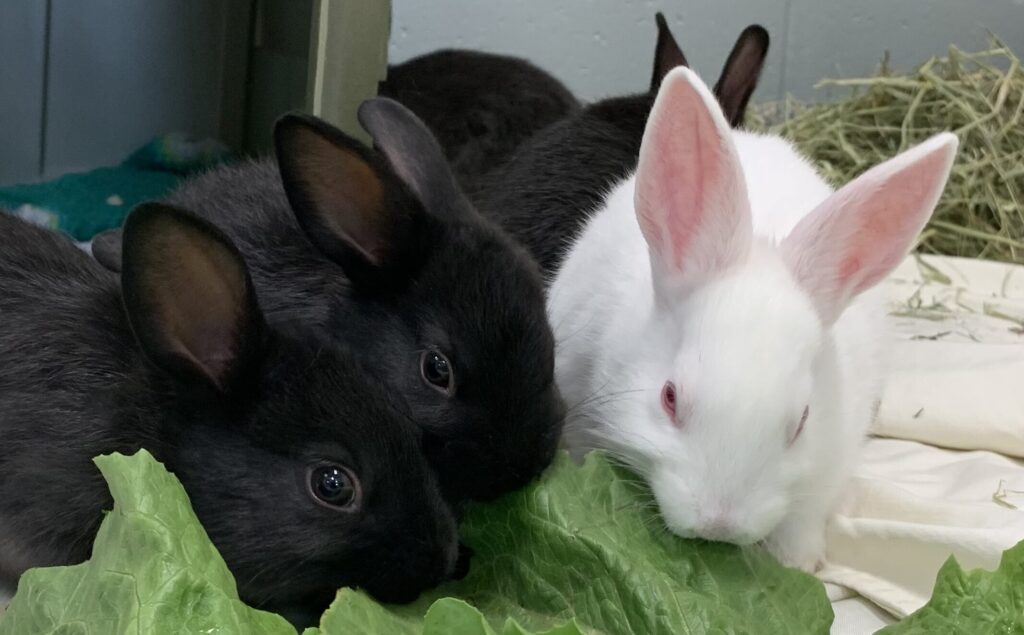

What an exciting time! Adopting a new friend can be a big responsibility and we want to help ensure each animal is set up for success in their new home. We encourage you to keep the following tips in mind when you bring home your new rabbit.
A check-in with your family veterinarian within the first week after adoption is critical to ensure continuity of care for your new friend, and to create a preventative health care plan tailored to their specific needs and to your lifestyle. The goal is to prevent future disease and illness, which will ideally also help reduce future costs of care.
Medical Considerations
As a hind-gut fermenting species, the health of the “good” gut bacteria is directly related to the rabbit’s health. Any digestive disturbances can be catastrophic for rabbits and must be addressed by your family veterinarian. Your rabbit’s teeth will grow continuously throughout their life. To help wear down their ever-growing front teeth, provide your rabbits with chewing
items such as cardboard and wooden toys. Regular visits to your family veterinarian are important to identify if the teeth need to be trimmed. Your rabbit’s nails will need to be trimmed regularly.
Housing
When selecting a cage for a rabbit, bigger is always best. This will allow your rabbit to express natural behaviors, which will decrease stress. Your rabbit should have access to an exercise pen daily, where they can stretch and jump around with more space. They should not be limited to just their cage. Enclosures should have solid bottoms. They can be covered to prevent foot injuries with shredded newspaper, grass hay, aspen or hardwood shavings. Avoid using wood shavings made from pine or cedar, as they can be very irritating to their respiratory system. A hiding place must be provided for your rabbit for when they need some quiet time. Enclosures should remain off the floor to decrease stress.
Nutrition
When you feed your rabbit, a proper diet is essential to keep them healthy. Rabbits are herbivores and require a high-fibre diet to ensure good gastrointestinal health. The majority of a rabbit’s diet should consist of unlimited, high-quality Timothy hay, which should always be available. A smaller amount of fresh vegetables and a limited amount of pellets should be offered with the occasional treat.
Enrichment
Rabbits enjoy activities that allow them to express their natural behaviours, such as hiding, climbing, constructing and chewing. Enrichment is very important to help keep your rabbit happy and behaviourally healthy. Rabbits need at least an hour out of their cage every day. Your rabbit may enjoy a walk indoors with a harness or hop around a pen, but don’t let the rabbit roam your home unsupervised – rabbits love to chew! Rabbits are quite social and need quality interaction every day.