National Pet Memorial Day: Honouring the pets who changed our lives
Our pets leave a lasting mark on our hearts.
They greet us at the door after a long day, offer comfort when we need it most, and fill our lives with unconditional love, laughter, and companionship. They teach us about unconditional love and how to live in the moment. They become part of our families and leave paw prints on our hearts that never fade. The bond we share with our pets is unlike any other, which is why saying goodbye can be one of life’s most difficult experiences.
On National Pet Memorial Day, we pause to remember the beloved animals who have touched our lives and celebrate the joy they brought us. Whether they were by our side for many years or a fleeting time, the memories we shared remain with us forever.
For many people, finding meaningful ways to honour a cherished companion can bring comfort while keeping their legacy alive. A tribute donation made in honour or memory of a beloved pet is one way to celebrate the love you shared while helping vulnerable animals receive the care they need.
When you make a memorial gift to the Ontario SPCA and Humane Society, you’re creating a lasting legacy that helps provide shelter, medical care, enrichment, and a brighter future for animals waiting for loving homes.
Honour their memory in a meaningful way
There are many ways to remember a special pet this National Pet Memorial Day:
- Make a tribute donation in their honour or memory
- Send a personalized eCard to family or friends
- Create a lasting tribute with a pet memorial keepsake through Paws & Give™
- Access our free pet loss support resources and information
Our collection of memorial keepsakes includes personalized items designed to celebrate the unique bond between pets and the people who love them, including custom framed prints, custom memorial pillows, pet fur keepsake keychain, memorial suncatcher and a rainbow bridge keepsake.
Every purchase helps support animals in need.
Their love lives on
While our pets may no longer be physically by our side, their love, loyalty, and companionship remain part of us forever.
This National Pet Memorial Day, take a moment to remember the pets who changed your life. By making a tribute gift, sending an eCard, or purchasing a memorial keepsake, you can honour their memory while helping provide hope, healing, and second chances for animals awaiting their fur-ever homes.
Udon’s story of healing, hope and home
When Udon arrived at the Ontario SPCA and Humane Society York Region Animal Centre in January 2026, the six-year-old tabby was in desperate need of care.
He had scabs on his face, a painful infection affecting his left eye, fleas and severe stomatitis – a painful dental condition that had gone untreated for years. For weeks, Udon barely lifted his head. But underneath everything he had been through was a sweet, affectionate cat who just needed the chance to heal.
Helping Udon heal
When Udon first arrived, the animal care team’s biggest concerns were his painful stomatitis and entropion affecting his left eye. He needed dental work as soon as possible to begin feeling better.
During his dental and entropion procedures, testing also revealed that Udon was FIV positive.
“Following his procedures, you could tell he almost immediately started to feel better,” says Crystal Brain, Manager of the Ontario SPCA and Humane Society York Region Animal Centre.
Cats living with FIV can still enjoy long, happy and healthy lives with appropriate care and management. Read our blog to learn more about FIV. While Udon’s diagnosis meant some additional precautions were required while he was in the animal centre, it didn’t change the loving personality that began emerging as he recovered.
Before long, Udon was showing everyone just how affectionate he could be.
“Udon’s very lovable personality definitely worked in his favour,” says Crystal. “He loved people and was very affectionate.”
Finding the right family
Finding Udon a home came with one additional consideration. Since he is FIV positive, he needed to be the only cat in his new home or live with another cat who was already FIV positive.
The team remained hopeful that the right family was out there, and they kept sharing Udon’s story.
Udon was regularly featured across the Ontario SPCA’s social media channels. Eventually, his story reached a family in Toronto who already had an FIV-positive cat and understood the care and considerations involved.
After seeing Udon online, they came to meet him. The connection that started with a social media post soon led to Udon heading home.
Settling into his new life
In his new home, Udon quickly began showing even more of the playful, affectionate personality his animal care team had come to know.
He loves jumping between the windowsills to watch everything happening outside. His adopter has also discovered that Udon has quite the impressive jump and a serious love for catnip-filled mouse toys.
“He’s got seemingly endless energy, but curls up with me in bed every night when it’s time to settle in,” says Udon’s adopter, Karen.
It’s a life that looks very different from the one Udon knew when he first arrived in our care. The cat who once barely lifted his head is now spending his days playing and soaking up all the comforts of home.
A story share can help change a life
Udon’s journey is also a reminder that you can help animals in need, even if you aren’t ready to adopt. Following the Ontario SPCA on social media, liking and sharing posts, and telling friends and family about animals waiting for adoption are all amazing ways to help.
Every interaction can introduce an animal to someone new. In Udon’s case, sharing his story helped reach the family who had exactly the kind of home he needed. You never know whether one social media share could help connect them with the person they’ve been waiting for.
Want to help more animals like Udon find their second chance? Follow the Ontario SPCA and Humane Society on Facebook and Instagram, share our posts about animals who are waiting for homes, and help their stories reach more people.
What to expect when your dog comes into heat
If you have a female dog who hasn’t been spayed, you may have questions about what to expect when she comes into heat. From recognizing the signs and understanding how long a heat cycle lasts to preventing an unplanned pregnancy and keeping her comfortable, knowing what to expect can help you and your dog navigate the experience.
How will I know my dog is in heat and how long will her heat last?
The first signs a dog is going into heat are swelling around her vulva and bloody vaginal discharge. You will know your dog’s heat is coming to an end when her vulva is back to its normal size and you no longer see any vaginal discharge. When your dog does come into heat, you can expect her heat cycle to last somewhere between two and three weeks.
When will my female dog first come into heat?
Sexual maturity for the female dog usually happens around six months of age. Smaller breeds may go into heat earlier than this. Large breed dogs can be up to two years old before they start their first one.
How often will my female dog come into heat?
Female dogs typically come into heat about twice a year, but this is an average. When your dog first starts cycling, the timing between her heats may be irregular. Heats generally become more regular after about a year.
I do not want my dog coming into heat and getting pregnant. What can be done to prevent this?
The recommended way to prevent heat and unplanned pregnancy is to have your dog spayed. This surgical procedure is performed by a veterinarian while your dog is under general anesthesia. At the Ontario SPCA and Humane Society’s high-quality, high-volume spay/neuter clinics, we surgically remove both ovaries as well as the uterus. This is called an ovariohysterectomy. This procedure is irreversible. Your dog will no longer go into heat and will not be able to become pregnant. Spaying also reduces your dog’s risk of certain diseases and may help prevent behavioural issues.
Learn more about our veterinary services.
Hormonal therapy may be used to suppress your dog’s cycle, but this is only temporary and not often recommended due to the potential for serious adverse effects.
My dog has come into heat. What should I do?
If your female dog comes into heat before you can get her spayed, here is what you can do:
First, mark down on your calendar the date your dog starts her heat and the date she ends her heat.
Next, when calling to book your dog’s surgery, please tell the veterinary clinic the dates that you marked on your calendar. It is very important that your dog is booked for surgery no earlier than eight weeks from the beginning of her last heat. This waiting time is necessary for your dog’s safety to minimize blood loss during surgery.
Please remember that when a female dog is in heat, she will be receptive to male dogs. In addition, they will be very interested in her! It’s at this time that she may allow mating. Keep your dog on a leash at all times and consider going for walks where you do not expect to meet other dogs. Allowing her out in your backyard unsupervised could also draw unplanned attention from the male dogs in your area, so supervised outdoor time is advised.
Managing the flow
Some female dogs have bloody discharge during heat, while others may have very little. Doggy diapers or washable, waterproof sanitary pants can help manage the discharge and protect your home. If using sanitary pants, you can add a sanitary pad for additional absorbency. Diapers or sanitary pants and pads should be changed regularly and may need to be changed three or more times a day, depending on your dog’s flow.
Allow your dog some supervised time outside without the diaper so her skin can breathe. Also, give any soiled areas on her hind end a gentle clean with warm water and a cloth once a day and then towel dry. This should help to minimize skin irritation. Diapers and pants are only recommended if your dog won’t ingest them, which can lead to other complications.
Book a spay appointment
To learn more about our spay and neuter services, visit ontariospca.ca/spayneuter.
If this information was helpful, please help us continue to educate about pet health and well-being by making a donation. As a registered charity that does not receive annual government funding, the Ontario SPCA and Humane Society depends on the generosity of donors to change the lives of animals in need.
Foods that are toxic to pocket pets
Pocket pets like hamsters, guinea pigs, and rabbits often get treats straight from the kitchen table, and it’s easy to assume that if a food is healthy for humans, it must be fine for them too. Unfortunately, that isn’t the case. Many common fruits, vegetables, and household foods that seem harmless can cause serious illness or even death in small animals. Knowing what to avoid is one of the simplest ways to keep your pocket pet safe.
Why pocket pets are so sensitive
Hamsters, guinea pigs, and rabbits have small bodies and delicate digestive systems, so it doesn’t take a large quantity of a toxic substance to cause harm. Guinea pigs and rabbits are also strict herbivores, with digestive systems built to process high fiber plant matter, which means foods with high sugar or fat content can throw off their gut bacteria and lead to serious digestive distress. Because these animals can’t vomit, anything toxic they eat stays in their system longer, making prevention especially important.
Foods to avoid
While the following isn’t an exhaustive list of foods that can be harmful to pocket pets, it contains some common household foods that should be avoided:
Onions, garlic, and chives: These contain compounds that damage red blood cells and can cause anemia in small animals. This applies whether the food is raw, cooked, or powdered.
Chocolate and caffeine: Both contain theobromine and caffeine, which are toxic to small animals and can affect the heart and nervous system.
Avocado: Avocado contains a compound called persin, which is particularly dangerous for rabbits and guinea pigs and can cause difficulty breathing and heart damage.
Iceberg lettuce: While leafy greens are generally healthy, iceberg lettuce is low in nutrients and contains a compound called lactucarium, which can cause digestive upset in large amounts.
Rhubarb leaves: These contain high levels of oxalic acid, which can be toxic and even fatal.
Raw beans and potatoes: Both contain compounds that are toxic to small animals, especially green or sprouting potatoes.
Sugary or processed human snacks: Cookies, candy, and other processed treats offer no nutritional value and can cause obesity and digestive problems. Many items also contain xylitol, which is highly toxic to animals.
Almonds: Small animals should never be given almonds, as raw almonds contain trace amounts of cyanogenic compounds and have a high fat content.
Citrus fruits: Feeding citrus fruits to small animals can cause mouth sores and digestive upset due to their high acidity. Guinea pigs are unable to produce their own vitamin C, so while this doesn’t relate to toxicity directly, it’s worth noting that a diet lacking vitamin C can lead to serious health issues.
Dairy: Rabbits should avoid yogurt drops, and other dairy-based treats that are often sold in pet stores. Rabbits are lactose intolerant, and dairy can cause significant digestive upset. Rabbits should also avoid nuts and seeds, which are too high in fat for their digestive systems.
Signs of toxicity to watch for
If your pocket pet has eaten something toxic, symptoms can include lethargy, loss of appetite, diarrhea, drooling, difficulty breathing, or unusual behaviour. Because small animals can decline quickly, any of these signs should be treated as an emergency.
If you think your pet may have ingested a potentially poisonous substance, contact your veterinarian or 24-hour emergency poison hotline.
Call Pet Poison Hotline at 855-764-7661
Call ASPCA Poison Control Center (APCC) at 1-888-426-4435 (fees may apply)
Keeping treat time safe
Pocket pets can enjoy a wide variety of safe fruits and vegetables in moderation, including small amounts of apple, carrot, romaine lettuce, and leafy greens like cilantro or basil. When introducing a new food, start with a small portion and watch for any signs of digestive upset before making it a regular part of their diet.
A little research before treat time goes a long way. By knowing which foods to avoid, you can keep snack time safe and enjoyable for your pocket pet.
If this information was helpful, please help us continue to educate about pet health and well-being by making a donation. As a registered charity that does not receive annual government funding, the Ontario SPCA and Humane Society depends on the generosity of donors to change the lives of animals in need.
Teaching kids to be gentle and respectful of animals
Growing up with an animal can be a special experience for a child. Animals have the potential to become their best companions, while also teaching important lessons about respect, care, responsibility and compassion from a young age.
But as a parent, it’s also completely understandable to feel a little nervous about introducing a young child to an animal. Kids are curious, full of energy, and still learning boundaries in the world around them. They may not know how to respectfully interact with an animal, which is essential for safe and enjoyable moments together.
Learning how to live with an animal
One of the most important things we can teach kids is that animals have their own feelings and preferences. A stuffed animal can be played with whenever a child wants. A living animal has a choice. Sometimes they might want to play or cuddle and other times they might want to be left alone. Helping kids understand that differences early can set the foundation for a respectful relationship with animals.
Try explaining that just like they might not always want a hug or want someone touching their things, animals can feel the same way. Putting it into terms children understand can make the idea of an animal’s boundaries much easier to grasp.
Every animal has different boundaries
There isn’t one set of rules that apply to every animal. One dog might love having their belly rubbed, while another would rather sit beside you. One cat might happily curl up on a child’s lap, while another prefers affection on their own terms.
Encourage kids to get to know the individual animal in front of them.
Teaching children to notice when an animal walks away, turns their body, hides or otherwise shows they don’t want to interact helps them understand an important lesson: when an animal asks for space, we listen.
It can also help to show kids what the animal does enjoy. Instead of only saying, “Don’t do that,” try showing them how to gently pet the animal or explaining where they like to be touched. This helps make learning positive for both the child and the animal.
Growing up together
Having an animal in a child’s life can be about so much more than having someone to play with.
Everyday routines can teach responsibility and care. Depending on their age, children can help participate in feeding routines, or learn why their animal needs enrichment, and rest. These little moments can also encourage empathy. Asking questions like, “How do you think they’re feeling?” or “Do you think they want some space?” get kids thinking about the animal’s experience and needs.
Over time, a child isn’t just learning how to care for an animal. They’re learning what it means to be responsible for another living being. It’s okay to take it slowly. If you’re nervous about how your child and animal will interact, you don’t need to rush things.
Supervising their time together gives you the opportunity to guide your child and reinforce gentle behaviour when either the child or animal needs a break. With patience and consistency, children can learn what respectful interactions with animals look like.
And when those lessons click, the relationship that develops can be incredibly rewarding.
Helping kids become AnimalSmartä
At the Ontario SPCA and Humane Society, we believe learning compassion for animals should start at a young age.
Through our AnimalSmart humane education program, children and youth learn about animal well-being, emotions, responsible animal care and the importance of treating animals with respect.
AnimalSmart brings these conversations into classrooms through engaging, age-appropriate lessons that encourage students to think about animals as individuals with their own needs and feelings.
Teaching a child to be gentle with an animal might feel like a small lesson today, but the respect, responsibility and compassion behind it are lessons they will carry with them for life.
To learn more about AnimalSmart, sign up to become a volunteer, or book a presentation at your school, visit ontariospca.ca/animalsmart Together we can help inspire the next generation of animal advocates!
Back to school enrichment for animals
It’s time to head back to school and return to your family’s regular activities, which means your animal may be alone for longer periods during the day. This is a great opportunity for some enrichment time for your furry friend. It will help them adjust, as well as make your transition back to school smoother.
Let’s talk about enrichment
It’s important to remember that animal enrichment is an ongoing process, not a single object or event, and it is usually delivered on a routine schedule. If you haven’t had your pet’s enrichment scheduled before, don’t worry! It’s never too late to start.
Goals for enrichment:
- Improving quality of life
- Increasing the ability to successfully cope with daily stressors
- Encouraging natural behaviours, such as hunting, chasing, and climbing
Here are a few enrichment ideas and activities to help your animals adjust to your family being out of the home.
Cat enrichment
Food puzzles
- Puzzle feeders, toys or devices that contain food encourage your cats to engage in predatory behaviour. Manipulating the device provides stimulation and exercise.
Fishing game
- Fill a shallow container with water and a few floating toys (such as ping pong balls). This may be a good activity for when everyone is back from school/work and you can supervise the fun!
Dog enrichment
Food dispensing toys
These types of toys help dogs work for their food, and provide enrichment, especially when the dog is alone. For information on cereal box dispensers, click here. https://www.youtube.com/watch?v=ulxvdJiwZ88
Music
- The right music can calm your dog and provide them with enrichment. Make sure to select dog-friendly music, such as classical music, or music created specifically for dogs. Learn more here.
Small animal enrichment
Nesting material
Nesting material should be provided for your small animal to build a nest or resting place for themselves. This provides physical and mental stimulation.
- Examples of nesting material include cotton balls, pieces of fleece, shredded newspaper, toilet paper and hay.
White noise
- White noise can have a calming effect and promote relaxation for small animals.
- White noise should be used for shorter periods of time (about two hours long) to prevent them from becoming habituated to it or “tuning it out.”
Separation anxiety and enrichment
Keep in mind, if your furry friend is used to having people at home, they may be susceptible to developing separation anxiety when normal routines resume. Animals that experience a great deal of change, such as a new environment or new schedule, can be at higher risk.
Some signs of separation anxiety include:
- Howling
- Barking, or whining excessively
- House-trained dogs may also have “accidents” indoors and inappropriate chewing or eating of household items
For more information and what to do if you notice these signs, read this blog.
We hope you found these ideas helpful and that they help to smooth the transition back to school for your family!
If this information was helpful, please help us continue to educate about pet health and well-being by making a donation. As a registered charity that does not receive annual government funding, the Ontario SPCA and Humane Society depends on the generosity of donors to change the lives of animals in need.
Transporting your kitten: Tips for a calmer journey
Whether you’re bringing your new kitten home, heading to a veterinary appointment or taking a trip together, getting your kitten comfortable with travelling can help make the experience easier for everyone.
A carrier and car ride may be unfamiliar experiences for a young kitten. By introducing them to their carrier and travel gradually, you can help them build positive associations and feel more comfortable when it’s time to hit the road.
Our friends at Royal Canin Canada have three helpful tips to help you prepare your kitten for transportation and make each journey as calm and positive as possible.
Watch this video for tips on transporting your kitten.
IMMEDIATE RELEASE
The Ontario SPCA expands access to veterinary care with free Midland clinic
Midland, ON (Sept. 2, 2026) – Following a positive response to its community wellness clinics this summer, the Ontario SPCA and Humane Society is bringing another free vaccination and wellness clinic to Midland to help make essential veterinary care more accessible to pet families who may otherwise face barriers to accessing care.
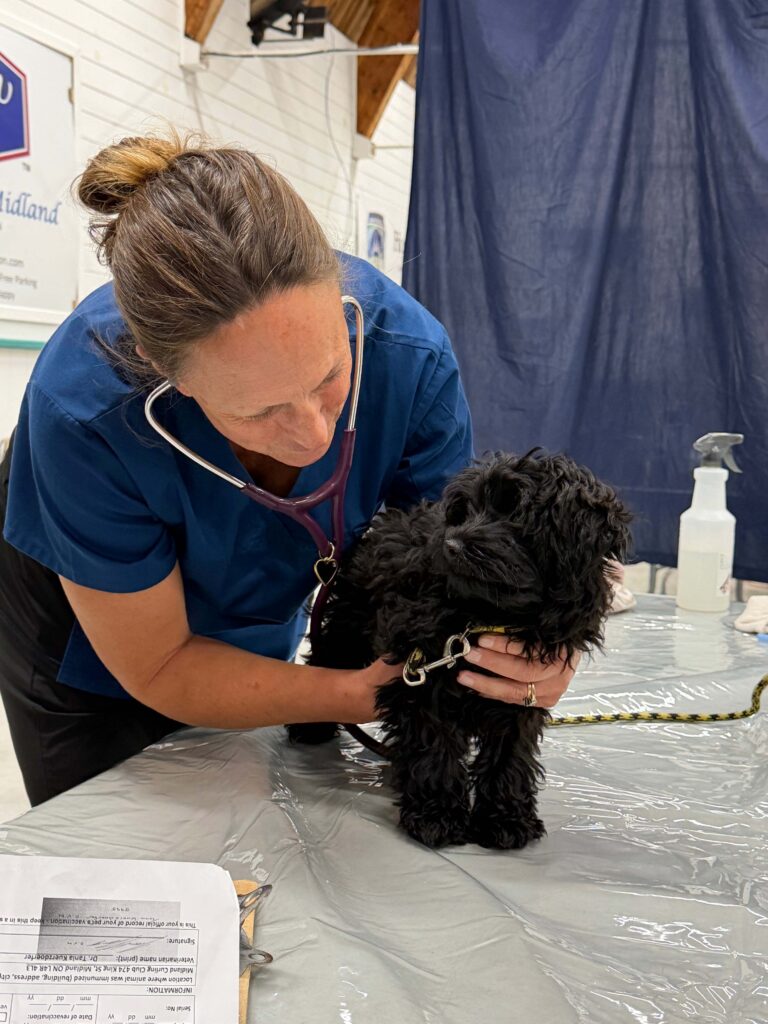
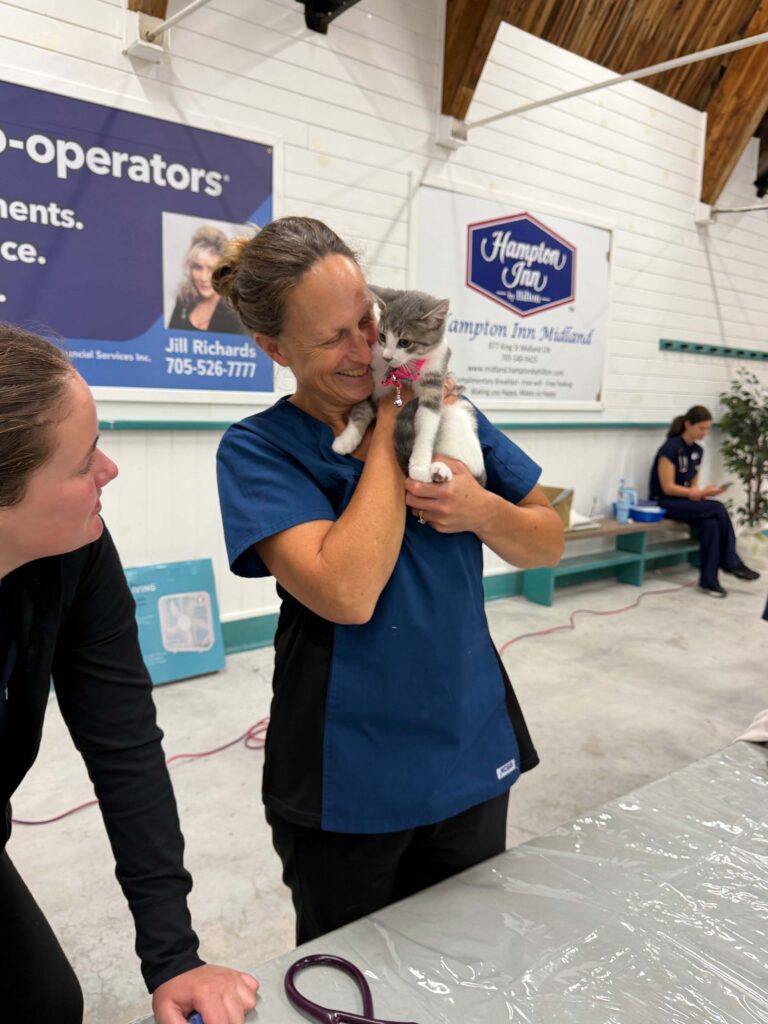
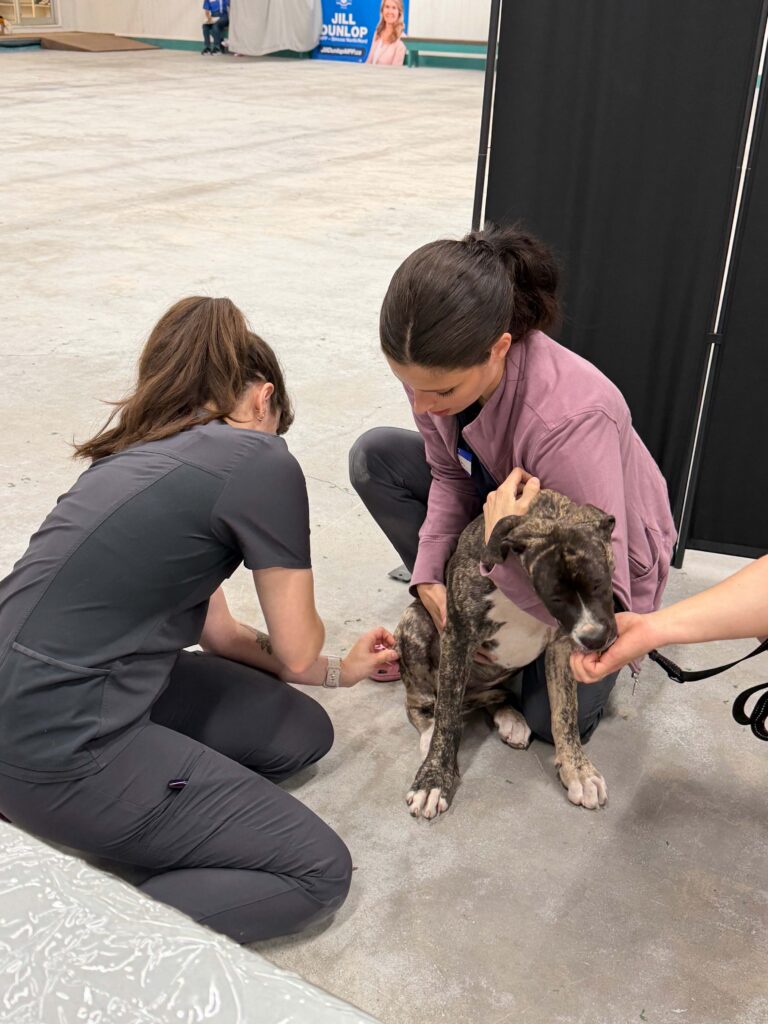
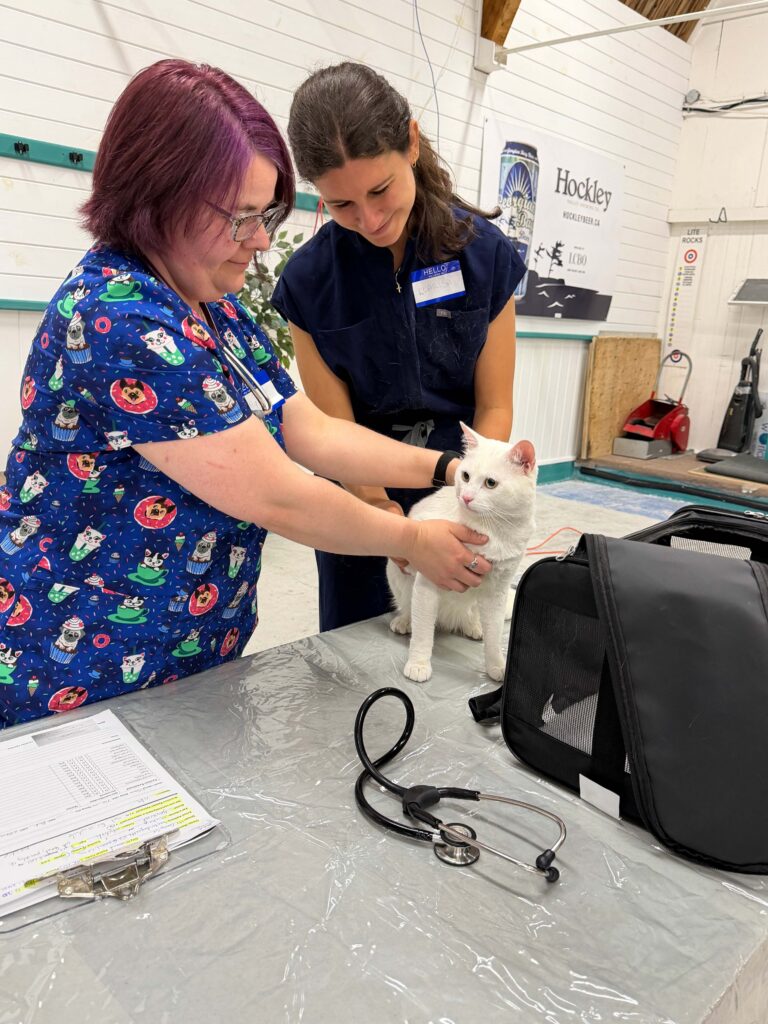
Taking place Saturday, Sept. 12 at the Midland Curling Club, located at 474 King St., the clinic will provide preventive veterinary services for cats and dogs, including core and booster vaccinations, as well as basic wellness examinations.
The clinic is open to residents of Midland, Penetanguishene, Tay Township, Tiny Township and Christian Island who are on a subsidized income, or those who hold a valid Indigenous Status Card. Valid ID and proof of subsidy, or an Indigenous Status Card, are required.
Appointments are required for both cats and dogs. Cats will be seen from 12 p.m. to 1:30 p.m., followed by dogs from 1:30 p.m. to 3 p.m.
“Preventive veterinary care can make a meaningful difference in a pet’s health, but we know that cost and access can sometimes make it difficult for families to get the care their pets need,” says Krista Grant, Community Outreach Coordinator, Ontario SPCA and Humane Society Midland and District Animal Centre. “The response to our previous clinics has shown us how valuable these services are to the community.”
The Ontario SPCA has already helped close to 100 pets through three community wellness clinics held in Midland this summer. In addition to administering 150 vaccines, the Ontario SPCA also distributed more than 1,600 lbs of pet food, as well as basic pet care supplies.
These wellness events have been made possible thanks to the County of Simcoe’s Social and Community Investment Fund, with support from Mountainview Veterinary Clinic, Pet Valu Midland, and Trooper Pet.
To learn more or to book an appointment, visit ontariospca.ca/midland
##
Media contact:
Krista Grant
Community Outreach Coordinator
Ontario SPCA and Humane Society Midland and District Animal Centre
705-534-4459 x 374
The Ontario SPCA and Humane Society
The Ontario SPCA and Humane Society is a registered charity that has been changing the lives of animals for over 150 years. The Society provides care, comfort and compassion to animals in need in communities across Ontario. It values all animals and advocates to treat them with respect and kindness. The Society strives to keep pets and families together and does so through a variety of community support services, such as sheltering and adoptions, including emergency sheltering, feral cat management programs, animal transfers, food distribution, humane education, animal advocacy, and spay/neuter services.
The Ontario SPCA does not receive annual government funding and relies on donations to provide programs and services to help animals in need. To learn more, or to donate, visit ontariospca.ca. Charitable Business # 88969-1044-RR0002. The Ontario SPCA and Humane Society Midland and District Animal Centre is located on land which is the traditional and treaty territory of the Anishinabek people, now known as the Chippewa Tri-Council comprised of Beausoleil First Nation, Rama First Nation and the Georgina Island First Nation.
Debunking rescue dog myths
Thinking about adopting? You may have heard a few things about dogs in shelters that just aren’t true. Let’s set the record straight.
Myth #1: Rescue dogs have behavioural issues
Dogs end up in shelters for all kinds of reasons, such as a move, a change in family circumstances, or financial hardship, and very rarely because something is “wrong” with them. Many adoptable dogs are happy, healthy, and well-adjusted family members simply waiting for a second chance. Our staff get to know each dog’s personality and needs, so we can help match you with a dog that’s the right fit for your home.
Myth #2: You can’t know what you’re getting with a rescue
Our staff and volunteers spend time observing the behaviour, personality and energy levels of the dogs in our care. We’re happy to answer any questions so you can make an informed decision before bringing your new best friend home. In fact, when adopting an adult dog, you often know more of what you’re getting than you would with an untrained puppy.
Myth #3: Rescue dogs aren’t good with kids
A dog’s suitability with children comes down to the individual dog, not whether they’re in a shelter. Plenty of adoptable dogs are gentle, patient, and wonderful with kids. Our staff take household details, including children, into account when helping pet parents find their match.
Myth #4: Rescue dogs will always have separation anxiety or be hard to train
Every dog is unique. Many dogs in shelters have existing training, while others may need help learning new routines or adjusting to a new environment. With patience, consistency, and the right support, adopted dogs can thrive in their new homes. Our staff is also here to provide guidance and resources.
Every dog deserves a chance to find their loving home. By choosing to adopt, you’re not just gaining a loyal companion, you’re giving a deserving dog the home they’ve been waiting for.
Check out our blog for some heartwarming happy tail stories.
Ready to meet your new best friend? Visit your local Ontario SPCA and Humane Society animal centre or visit our adoption page today.
Not ready to adopt? As a registered charity that does not receive annual government funding, the Ontario SPCA depends on the generosity of donors to change the lives of animals in need. Please consider donating today.
With the school season coming back in full swing, your family will be adjusting to the new schedule – and that includes your pets!
Your furry family member may need time to adjust to a change in schedule. Separation anxiety can occur for pets when they are used to having you around all the time. Keep reading for signs to watch for, and how to help prevent separation anxiety.
Symptoms of separation anxiety
Some symptoms include any of the following when left alone:
- Urinating and defecating
- Barking and howling
- Chewing, digging and destruction of the house
- Escaping from their enclosure
- Pacing in a fixed pattern
- Coprophagia, when the dog defecates and consumes all or some of their excrement
If these actions are a result of separation anxiety, they typically are not performed in front of the guardian.
Tips to help prevent separation anxiety
- Keep a schedule to fulfil your dog’s physical and social needs through daily activities such as play, positive reinforcement training, leashed walks, and environmental enrichment.
- Teach your dog to be comfortable being left alone or separated from you by implementing a doggy gate or a door.
- If you spend most of your day at home with your dog, make sure to give them some space, as receiving constant attention can make it harder for them when you leave.
- Plan alone time for your dog each day while you pick up groceries, take a short drive, or take a shower.
- Offer your dog a food puzzle toy when you are leaving to give them something fun to do.
- Play calming music, such as classical or species-specific music at times throughout the day and when you leave home.
- Reward your dog for any calm behaviour.
- Make your arrivals and departures calm. Avoid high emotional responses when you leave the house or when you first arrive home.
To learn tips on overcoming this anxiety with your pet, read our blog: How to Help a Pet with Separation Anxiety.
For more information on the condition, read: Anxiety, pets, and mental health.
If this information was helpful, please help us continue to educate about pet health and well-being by making a donation. As a registered charity that does not receive annual government funding, the Ontario SPCA and Humane Society depends on the generosity of donors to change the lives of animals in need.
Behind the scenes of a Northern dog transfer
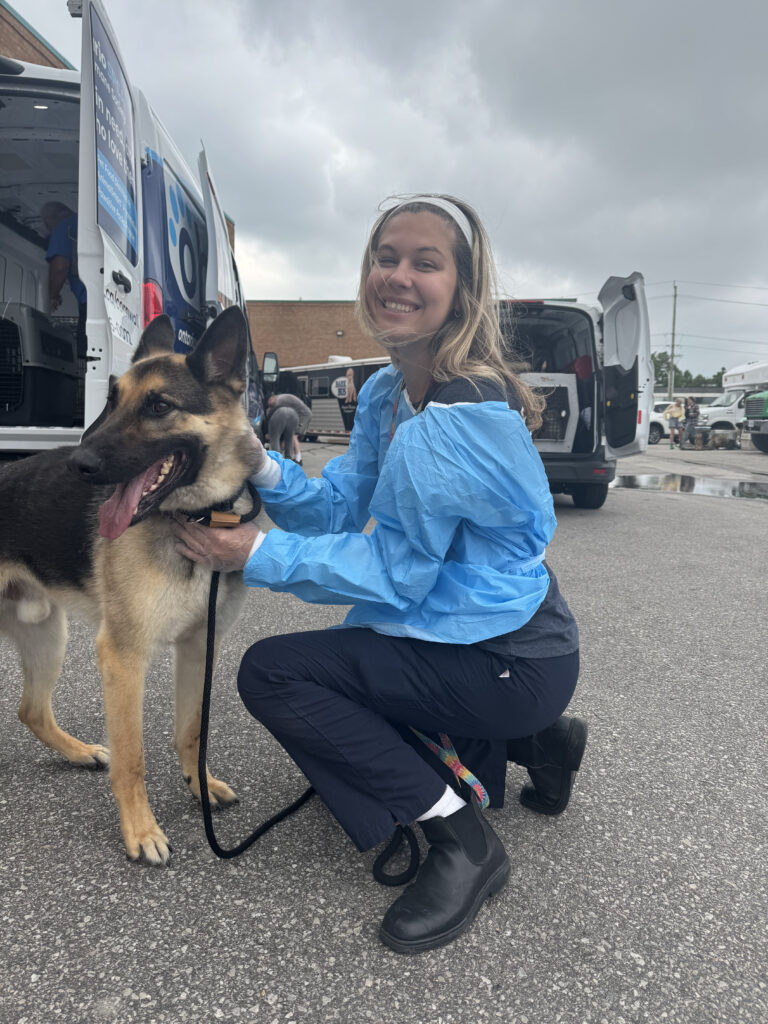
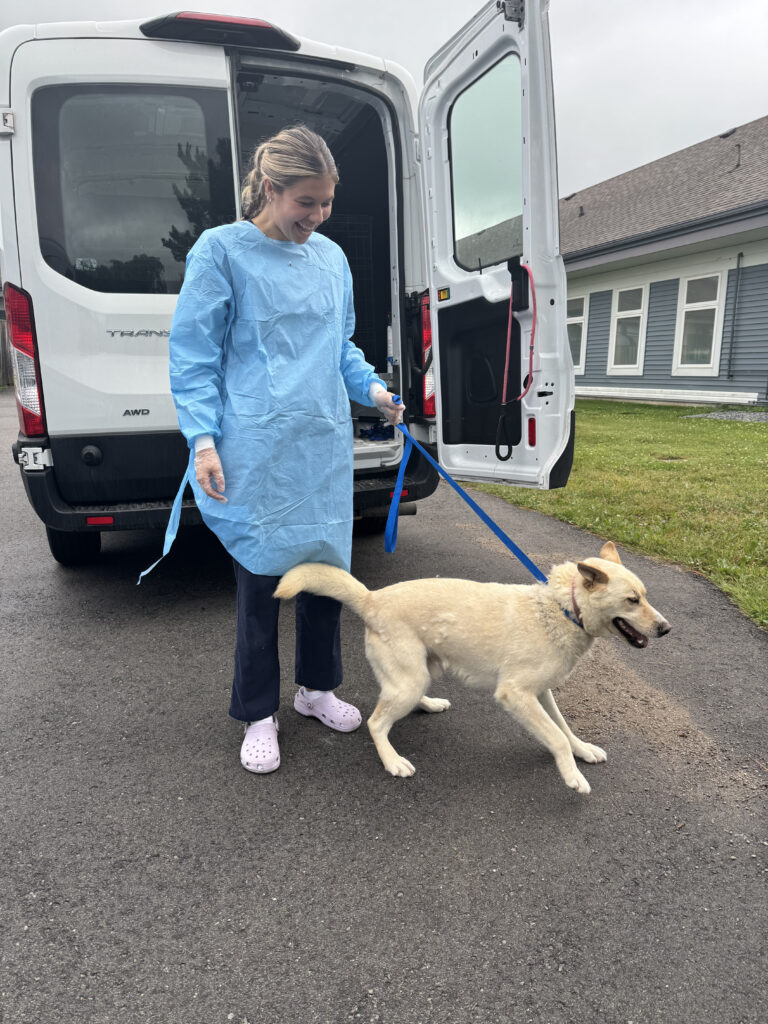
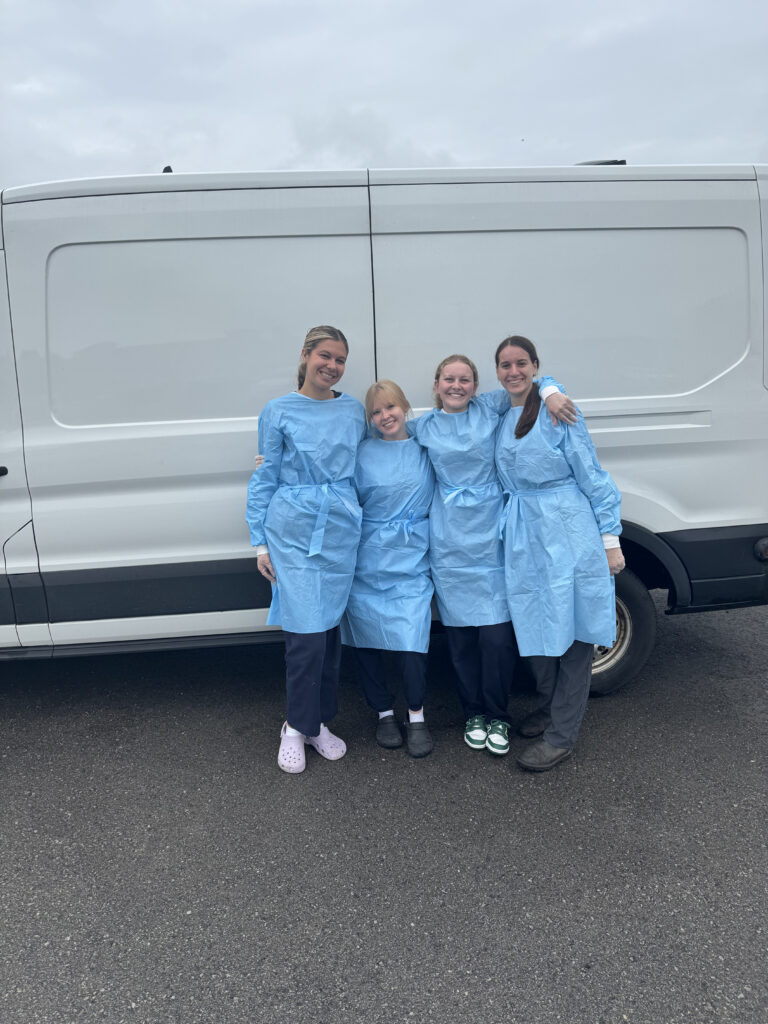
When people meet one of our adoptable dogs, they’re seeing the end of one journey and the beginning of another. What they don’t see is the work behind the scenes that makes it all possible. As an Animal Care Attendant at the Ontario SPCA and Humane Society York Region Animal Centre, I get to see firsthand where some of these second chances begin.
For me, Northern dog transfers are particularly special and are a reminder of why I love this work.
Helping Northern animals find loving homes
In many Northern communities, there are more adoptable animals than there are families who can give them homes due to a lack of access to spay/neuter services. This creates ongoing pressure on local resources and increases the need for outside support.
The Ontario SPCA and Humane Society works alongside local leaders and volunteers, responding when help is requested. Support may include food and supplies, mobile wellness and spay/neuter services, and safe transport to help animals access care and re-homing opportunities.
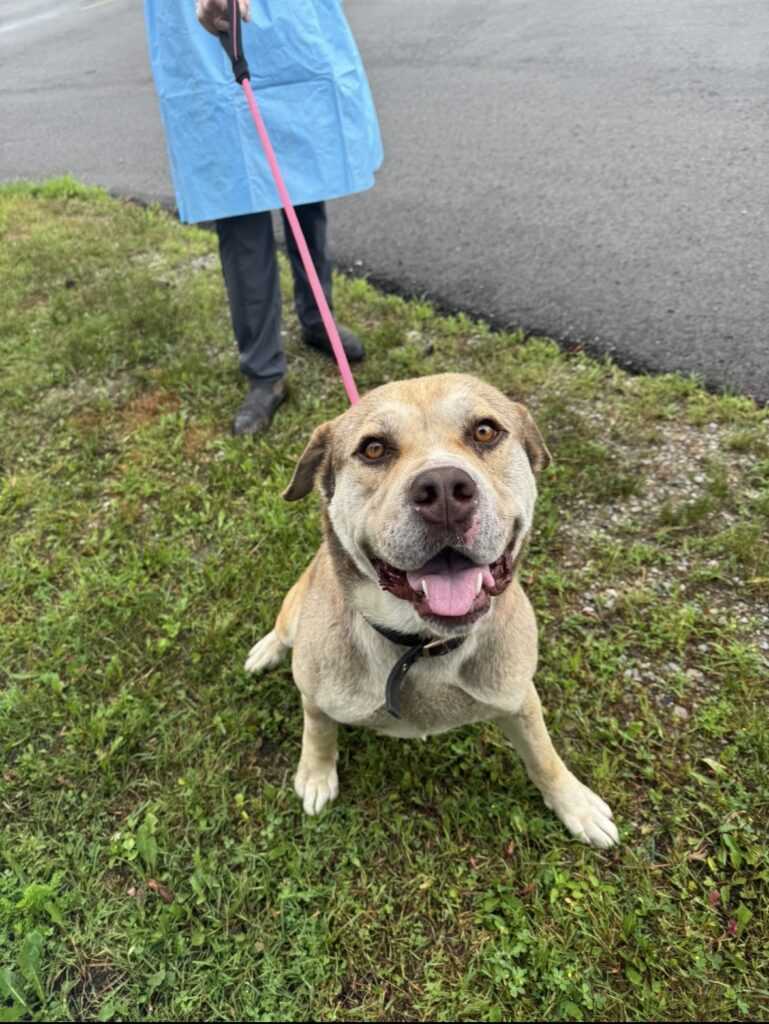
This year alone, the Ontario SPCA has welcomed close to 400 Northern dogs and cats into our care to help them find loving homes. Behind every one of those numbers is an animal with their own story. Every animal arrives with different experiences, different personalities and different needs, so we meet them exactly where they are.
Creating a safe, welcoming space
After travelling for thousands of kilometers, many of these dogs are unsure of where they are. Some have never walked on a leash before. Some have had very little interaction with people. When they come off the van or trailer, they’re just trying to figure out whether they’re safe.
Crystal Brain, the manager of the York Region Animal Centre, always reminds us, “It is our role to make them feel safe from the minute they arrive.”
Those words stick with me every time a transfer comes through our doors.
I’ve seen dogs step confidently out of their crate, ready to explore everything around them. I’ve also sat beside a crate for 30 minutes, helping a nervous dog feel comfortable. That’s one of the biggest things I’ve learned doing transfers; you can’t rush trust. Every dog tells us what they need, and it’s our job to listen.
Coming together to make second chances possible
What many people don’t realize is just how much happens before those dogs ever arrive at our centre. Ontario SPCA teams across the province spend days coordinating with Northern communities, arranging transportation, compiling veterinary records, preparing care plans, and making sure each receiving animal centre is ready to welcome these furry friends. It takes an incredible amount of teamwork to make every transfer possible.
The work doesn’t stop there. These transfers are also made possible because of our incredible volunteer drivers. At the Ontario SPCA, volunteer drivers travel to communities across Ontario, generously giving their time to safely transport dogs so they can begin their journey toward a second chance.
Transferring animals across the province to find new homes isn’t easy, but it is rewarding. Just this past June our team at the York Region Animal Centre welcomed a transfer of Northern dogs that didn’t arrive until nearly 1 a.m. While most people slept, we spent the next three hours intaking each dog and helping them settle into their new accommodations.
Getting to know the dogs
Once the dogs arrive, they begin their mandatory quarantine period. While it’s an important step to protect the health of the other animals in our care, it’s also one of my favourite parts of the process because it’s when we really get to know each dog.
Many of our Northern dogs are shy or unsure when they arrive. Every day we learn something new about them. Maybe they light up the second a tennis ball comes out. Maybe they love carrying stuffed toys around. We ultimately learn what makes them feel safe and how they can thrive.
Those little details might seem small, but they’re what makes all the difference. By the time a dog is ready for adoption, we know their personality, their favourite things and the type of home that will help them succeed. When adopters meet them, they see a confident, happy dog.
That’s why Northern dog transfers mean so much to me. They’re not just about bringing dogs from one place to another. They’re about giving them the patience and support they need to discover who they are before introducing them to the family that’s been waiting for them all along.
Every transfer is the beginning of a new story. It’s a reminder that when communities come together with one shared goal, we can change the lives of animals who need us most.
As a registered charity that does not receive annual government funding, the Ontario SPCA depends on the generosity of donors to make second chances possible for animals in need. To donate to support our work in the North, visit ontariospca.ca/donate
Looking for some indoor activities you can do with your family? Why not take up growing cat grass for your cats, or to donate to our animal centres!
Planting
To grow the cat grass indoors, fill the pot with soil just about two inches from the top, then scatter some seeds on top of the soil and put a thin layer of soil (about ¼ inch) over top.
Germination and growing cat grass
Take a spray bottle, or gently use your hands, and moisten the soil with water. Remember to do this gently or the seeds will be dispersed. Once the soil is evenly moist, cover the container with plastic wrap – add perforations for air flow. Set the container aside in a cool and dark place to help the seeds germinate
In two to three days, you’ll be able to see the tiny sprouts emerging. Remove the plastic wrap and ensure the soil is moist. Place the pot where your germinating sprouts can receive some sun and indirect light – a windowsill is perfect.
Continue to wait until about 10 to 12 days, until the grass gets to three to five inches high.
Additional tips:
Before sprouting, keep the seeds evenly moist but don’t soak them. After sprouting, reduce watering to keep the soil slightly moist only.
Keeping it in a naturally well-lit place will make it grow well with regular watering. You can also use grow lights.
Don’t overwater!
As soon as the grass begins to turn colour or wilt, start planting again.
If this information was helpful, please help us continue to educate about pet health and well-being by making a donation. As a registered charity that does not receive annual government funding, the Ontario SPCA and Humane Society depends on the generosity of donors to change the lives of animals in need.