What an exciting time! Adopting a new friend can be a big responsibility, and we want to help ensure each animal is set up for success in their new home. We encourage you to keep the following tips in mind when you bring home your new cat or kitten.
- Kitty-proof your home: Remove any toxic plants and hide any electrical cords that the cat might have access to.
- Create a safe place:
- Set up your cat’s litter box, bowls (ideally at least 3 ft. from the litter), scratching post and toys in a quiet, safe place for the first week or two and allow them to come out at their own pace.
- Place your cat into the litter box in any new location so they know where it is.
- Cats may feel nervous/stressed when in a new environment. Offer vertical space where they can climb/jump and places to hide that are still accessible to you.
- Familiar scents can help with the stress of moving to a new home. Have a towel/blanket that was given to you from the animal centre close by the cat in this space. The use of pheromones can also help ease stress levels.
- When a cat is adopted, their “cat cabin” from the animal centre transforms into a temporary carrier that the cat can travel home in. Once home, adopters are encouraged to reassemble the cabin, as it has the cat’s scent on it and helps ease their transition into their new home by offering a familiar place to perch, sleep, hide and rub.
- We recommend keeping cats indoors. If your cat is curious about the outdoors or you want to give the cats access to a safe outdoor area, consider installing a fenced-in enclosure or allowing supervised access to your yard on a harness and leash.
Disease Testing
Feline Leukemia Virus (FeLV) is a virus that is transmitted between cats. There is a test for this virus. If you have a multi-cat household, testing prior to introducing your new cat should be discussed with your veterinarian. You should also ask your veterinarian about vaccination for FeLV. This is not something your new cat has received yet and, based on lifestyle and age, may be recommended by your veterinarian. More information on FeLV.
Feline Immunodeficiency Virus (FIV) is also transmitted between cats. The main differences between these two viruses are that FIV is less contagious, and many cats with FIV go on to live normal lives. Like FeLV, testing should be considered prior to introducing your new cat to a multi-cat household. Currently, vaccination for FIV is not recommended. More information on FIV.
Internal and External Parasites
Your new furry friend has received routine deworming and flea prevention prior to adoption, but further doses may be required. Fecal (poop sample) testing is recommended since some parasites can be zoonotic, which means humans can be infected. Talk to your veterinarian about future testing and prevention. We also recommend that other family pets be tested and treated for internal and external parasites prior to bringing your new furry friend home. For more information, please visit canadianveterinarians.net and avma.org
Veterinary Visits After Adoption
A check-in with your family veterinarian within the first week after adoption is critical to ensure continuity of care for your new friend, and to create a preventative health care plan tailored to their specific needs and to your lifestyle. The goal is to prevent future disease and illness, which will ideally also help reduce future costs of care.
Preventative care includes important measures such as a physical exam, oral health care, dietary recommendations, behavioural support, vaccinations and parasite prevention. Any known medical or behavioural concerns will be disclosed prior to adoption, but there can be no guarantees of health. Therefore, this vet check will also be important to address any ongoing needs or pre-existing concerns to ensure that your new furry family member has the specific support required to thrive. A copy of your new furry friend’s medical history can be shared with your veterinarian.
Vaccines play a vital role in protecting your new cat or kitten from diseases, as well as keeping other furry and human family members safe.
Vaccines
- Core vaccines for cats include FVRCP (feline herpes virus, calicivirus & panleukopenia) and rabies. Rabies vaccination is a legal requirement. All cats adopted from the Ontario SPCA have received their rabies vaccination, provided they are old enough to receive it at the time of adoption. If they are too young to receive their rabies vaccination while in our care, this will need to be done through your family veterinarian. Your vet may recommend additional vaccines based on your cat or kitten’s lifestyle.
- Kittens are very susceptible and require more frequent booster vaccinations until they are approximately 18 weeks old. Vaccines must be boostered over the course of your cat’s life (not just during kittenhood) to ensure adequate protection.
- Other furry family members should be up to date on their vaccinations prior to bringing a new furry friend home.
- A vaccine schedule has been started for your new cat or kitten. Note that it may not be complete by the time of adoption, and follow-up with your family veterinarian is required to ensure adequate protection is achieved. For more information, visit catvets.com and canadianveterinarians.net
Healing After Surgery
Your new furry friend may have had surgery prior to adoption. In addition to following any specific post-op instructions given to you, it will be important to note the following:
- Give any post-op medication as prescribed.
- Utilize an e-collar (cone) or a onesie to help protect their incision site, as prescribed.
- Monitor the incision site daily for swelling, discharge and/or holes in the incision line.
- Keep your cat or kitten calm, and restrict their exercise (i.e., no jumping on/off surfaces, climbing stairs or going outside).
- Watch them closely to ensure they are comfortable, eating and drinking well, and using their litter box without issue.
If your cat or kitten is not eating well, is quiet or lethargic, not using their litter box, and/or if you see any concerns with their incision site, please contact your family veterinarian for support.
Cat-to-Cat Introductions
If introductions are done slowly and properly, this could potentially head off any future problematic behaviours. It can sometimes take cats months to adjust to a new friend, so you may need to be patient!
- It is important to give the new cat a separate space/safe haven, set up with all the necessities to adjust on his/her own.
- Allow the cats to smell and hear one another at first, but not see or touch.
- Gradually increase access to one another by sight and eventually allow supervised interactions if they remain positive. A baby gate could act as a helpful tool to allow a visual interaction, but still be kept apart from one another.
- Continue to separate the cats at night during the initial days.
- If you are bringing a new cat into a multi-cat household, introduce them individually.
Cat-to-Dog Introductions
With time, many cats and dogs can learn to coexist peacefully and may even become friends!
- Have two people on hand; one to handle the dog and the other to monitor the cat’s behaviour.
- Ensure your dog is on leash in the cat’s presence and that the cat has a safe place to retreat, if needed.
- Take the dog outside for a walk or play prior to greeting to reduce energy levels.
- Have high-value treats for both the dog and cat to reward good behaviour.
- Monitor both the cat and dog for emotional distress at all times. Watch your dog for signs of elevated prey drive (hunting-related behaviours) to ensure the safety of your new cat.
We are here to support you! For any pre-adoption questions or concerns, contact our adoption staff at your local Ontario SPCA and Humane Society animal centre.
What an exciting time! Adopting a new friend can be a big responsibility and we want to make sure each animal is set up for success in their new home. We encourage you to keep the following tips in mind when you bring home your new dog or puppy.
- Set up a well-ventilated crate or a separate doggie-proofed room for your new dog or puppy. It’s one of the easiest ways to help them successfully transition into your home. Make this a positive space, not a form of punishment. The goal is to provide a quiet retreat and/or to help with housetraining. Remember, the dog must be allowed appropriate breaks (every few hours) for feeding and potty breaks, as well as lots of time spent out of the crate or room for walks, training and playtime.
- Don’t give them unsupervised free run of the house until you are certain they are reliably housetrained and not destructive. Take them out for a potty break at regular intervals and offer lots of praise. More details on housetraining can be found here.
- It is highly recommended to have a fenced yard to keep your dog safe, but if that’s not possible, a tether or zip line can work as well. It is important for the safety of the dog that it isn’t left unsupervised while out on these devices.
- Be positive and consistent in your training. Dogs thrive on routine, which can help reduce anxiety.
Disease Testing
Heartworm & Tick-Borne Illness
Mosquitoes and ticks can transmit diseases to dogs. There is a blood test to screen for exposure to heartworm and tick-borne illness. This is not something your dog has received yet and, based on lifestyle and age, may be recommended by your veterinarian. Heartworm disease can have devastating effects, and heartworm testing and prevention are recommended for dogs between June 1 – November 1 in Ontario. It is recommended that you follow up with your family veterinarian about testing and preventatives for your new furry friend moving forward. For more information on heartworm, please visit canadianveterinarians.net
For more information on ticks and how they can affect your new furry friend, please visit: ticktalkcanada.com
Internal and External Parasites
Your new furry friend has received routine deworming and external parasite prevention prior to adoption, but further doses may be required. Fecal (poop sample) testing is recommended since some parasites can be zoonotic, which means humans can be infected. Please follow up with your family veterinarian for testing and treatment moving forward. We also recommend that other family pets be tested and treated for internal and external parasites prior to bringing your new furry friend home. For more information, please visit canadianveterinarians.net and avma.org
Veterinary Visits After Adoption
A check-in with your family vet within the first week after adoption is critical to ensure continuity of care for your new friend, and to create a preventative health care plan tailored to their specific needs and to your lifestyle. The goal is to prevent future disease and illness, which will ideally also help reduce future costs of care.
Preventative care includes important measures, such as a physical exam, oral health care, dietary recommendations, behavioural support, vaccinations and parasite prevention. Any known medical or behavioural concerns will be disclosed prior to adoption, but there can be no guarantees of health. Therefore, this vet check will also be important to address any ongoing needs or pre-existing concerns to ensure your new furry family member has the specific support required to thrive. A copy of your new furry friend’s medical history can be shared with your family vet.
Vaccines
Vaccines play a vital role in protecting your new dog or puppy from diseases that can be devastating to their health, as well as keeping other furry and human family members safe.
- Core vaccines for dogs include DA2PP (distemper, adenovirus [hepatitis], parainfluenza, parvovirus) and rabies. Rabies vaccination is a legal requirement. All dogs adopted from the Ontario SPCA have received their rabies vaccination, provided they are old enough to receive it at the time of adoption. If they are too young to receive their rabies vaccination while in our care, this will need to be done through your family veterinarian. Your vet may recommend additional vaccines based on your dog or puppy’s lifestyle.
- Puppies are very susceptible and require more frequent booster vaccinations until they are approximately 18 weeks old. Vaccines must be boostered over the course of your dog’s life (not just during puppyhood) to ensure adequate protection.
- Other family pets should be up to date on their vaccinations prior to bringing a new furry friend home.
- A vaccine schedule has been started for your new dog or puppy. Note that it may not be complete by the time of adoption, and follow-up with your family veterinarian is required to ensure adequate protection is achieved. For more information, visit canadianveterinarians.net
Healing After Surgery
Your new furry friend may have just had surgery prior to adoption. In addition to following any specific post-op instructions given to you, it will be important to note the following:
- Give any post-op medication as prescribed.
- Utilize an e-collar (cone) or a onesie to help protect their incision site, as prescribed.
- Monitor the incision site daily for swelling, discharge and/or holes in the incision line.
- Keep your dog or puppy calm, and restrict their exercise (i.e., leash walks, no jumping, or climbing stairs).
- Watch them closely to ensure they are comfortable, eating and drinking well and urinating/defecating without issue.
If your dog or puppy is not eating well, is quiet or lethargic, not urinating/defecating, and/or if you see any concerns with their incision site, please contact your family veterinarian for support. Click here for more information.
Dog-to-Dog Introductions
Dogs can safely be introduced to one another with some positive encouragement and body language awareness.
- Recruit a second person, one to handle each dog, and have lots of high-value treats available to reward good behaviour!
- Take the dogs on a walk together in a neutral setting (for example, a park or open field), keeping a safe distance between the two, and on loose leashes.
- If there is no distress noted in either dog, the distance between them can be gradually decreased.
- Once at home, allow the new dog to enter first to explore and then keep dog-to-dog interactions short, pleasant and supervised until you are confident they are at ease with one another.
Cat-to-Dog Introductions
With time, many cats and dogs can learn to coexist peacefully and may even become friends!
- Have two people on hand; one to handle the dog and the other to monitor the cat’s behaviour.
- Ensure your dog is on leash in the cat’s presence and that the cat has a safe place to retreat, if needed.
- Take the dog outside for a walk or play prior to greeting to reduce energy levels.
- Have high-value treats for both the dog and cat to reward good behaviour.
- Monitor both the cat and dog for emotional distress at all times. Watch your dog for signs of elevated prey drive (hunting-related behaviours) to ensure the safety of your new cat.
We are here to support you! For any pre-adoption questions or concerns, contact our adoption staff at your local Ontario SPCA and Humane Society animal centre.
What an exciting time! Adopting a new friend can be a big responsibility and we want to help ensure each animal is set up for success in their new home. We encourage you to keep the following tips in mind when you bring home your new rabbit.
Veterinary Visits After Adoption
A check-in with your family veterinarian within the first week after adoption is critical to ensure continuity of care for your new friend, and to create a preventative health care plan tailored to their specific needs and to your lifestyle. The goal is to prevent future disease and illness, which will ideally also help reduce future costs of care.
Preventative care includes important measures such as a physical exam, oral health care, dietary recommendations, behavioural support and parasite prevention. Any known medical or behavioural concerns will be disclosed prior to adoption, but there can be no guarantees of health. Therefore, this veterinary check will also be important to address any ongoing needs or pre-existing concerns to ensure that your new family member has the specific support required to thrive. A copy of your new rabbit friend’s medical history can be shared with your veterinarian.
Medical Considerations
- Regular veterinary visits are recommended to prevent illness and to keep your new rabbit as comfortable as possible. Because many veterinarians do not treat rabbits, it is highly recommended to find a suitable veterinarian before care is needed.
- As a hind-gut fermenting species, the health of the “good” gut bacteria is directly related to the rabbit’s health. Any digestive disturbances can be catastrophic for rabbits and must be addressed by your family veterinarian.
- Your rabbit’s teeth will grow continuously throughout their life. To help wear down their ever-growing front teeth, provide your rabbits with chewing items such as cardboard and wooden toys. Regular visits to your family veterinarian are important to identify if the teeth need to be trimmed.
- Your rabbit’s nails will need to be trimmed regularly.
Healing After Surgery
Your new furry friend may have had surgery prior to adoption. In addition to following any specific post-op instructions given to you, it will be important to note the following:
- Give any post-op medication as prescribed.
- Utilize an e-collar (cone) or a onesie to help protect their incision site, as prescribed.
- Monitor the incision site daily for swelling, discharge and/or holes in the incision line.
- Keep your rabbit calm, and restrict their exercise (i.e., no jumping on/off surfaces, climbing stairs or going outside).
- Watch them closely to ensure they are comfortable, eating and drinking well, and using their toileting area without issue.
If your rabbit is not eating well, is quiet or lethargic and/or if you see any concerns with their incision site, please contact your family veterinarian for support.
Housing
When selecting a cage for a rabbit, bigger is always best. This will allow your rabbit to express natural behaviours, which will decrease stress. Your rabbit should have access to an exercise pen daily, where they can stretch and jump around with more space. They should not be limited to just their cage.
Enclosures should have solid bottoms. They can be covered to prevent foot injuries with shredded newspaper, grass hay, aspen or hardwood shavings. Avoid using wood shavings made from pine or cedar, as they can be very irritating to the respiratory system. A hiding place must be provided for your rabbit when they need some quiet time. Enclosures should remain off the floor to decrease stress.
Nutrition
When you feed your rabbit, a proper diet is essential to keep them healthy. Rabbits are herbivores and require a high-fibre diet to ensure good gastrointestinal health. The majority of a rabbit’s diet should consist of unlimited, high-quality Timothy hay, which should always be available. A smaller amount of fresh vegetables and a limited amount of pellets should be offered with the occasional treat.
Always check with your family veterinarian before introducing any new foods to your rabbit.
Rabbits generally prefer heavy ceramic water bowls to drink out of, but some like sipper bottles too. Experiment to see which your rabbit prefers. For more information on diet, click here.
Coprophagy, or the eating of feces, is not cause for alarm. This is normal for most rodents and serves to help preserve valuable nutrients, as some are better digested during the second pass through the gut.
Enrichment
Your rabbit enjoys activities that allow them to express their natural behaviours, such as hiding, climbing, constructing and chewing. Enrichment is very important to help keep your rabbit happy and behaviourally healthy.
Rabbits need at least an hour out of their cage every day. Your rabbit may enjoy a walk indoors with a harness or hop around a pen, but don’t let the rabbit roam your home unsupervised – rabbits love to chew! Some chew toys can be included in their pen, but keep them away from anything they shouldn’t gnaw on, such as electrical cords, furniture, and houseplants. List of toxic plants.
Rabbits are quite social and need quality interaction every day. This can be interactive play, grooming, or a safe opportunity to associate with other pets. Rabbits generally do not like to be picked up off the ground. Instead, interaction with them on the floor will be safer and more comfortable.
Resources
Refer to these rabbit resources for more info:
We are here to support you! For any pre-adoption questions or concerns, contact our adoption staff at your local Ontario SPCA and Humane Society animal centre.
What an exciting time! Adopting a new friend can be a big responsibility and we want to help ensure each animal is set up for success in their new home. We encourage you to keep the following tips in mind when you bring home your new guinea pig.
Veterinary Visits After Adoption
A check-in with your family veterinarian within the first week after adoption is critical to ensure continuity of care for your new friend, and to create a preventative health care plan tailored to their specific needs and to your lifestyle. The goal is to prevent future disease and illness, which will ideally also help reduce future costs of care.
Preventative care includes important measures such as a physical exam, oral health care, dietary recommendations, behavioural support and parasite prevention. Any known medical or behavioural concerns will be disclosed prior to adoption, but there can be no guarantees of health. Therefore, this veterinary check will also be important to address any ongoing needs or pre-existing concerns to ensure your new family member has the specific support required to thrive. A copy of your new guinea pig friend’s medical history can be shared with your veterinarian.
Medical Considerations
- Regular veterinary visits are recommended to prevent illness and to keep your new guinea pig as comfortable as possible. Because many veterinarians do not treat guinea pigs, it is highly recommended to find a suitable veterinarian before care is needed.
- The Ontario SPCA does not spay or neuter guinea pigs due to the relatively high risk of mortality during surgery. Surgery can successfully be performed, but it is best done through a veterinarian who has guinea pig surgical experience.
- Your guinea pig requires vitamin C in their diet to prevent scurvy, which can cause issues like anemia and/or pain or swelling in the limbs/body. However, most high-quality guinea pig diets are fortified with vitamin C.
- As a rodent, your guinea pig’s teeth will grow continuously throughout their life. To help wear down their ever-growing front teeth, provide your guinea pigs with chewing items such as cardboard and wooden toys.
- Your guinea pig’s nails will need to be trimmed regularly.
Housing
When selecting a cage for a guinea pig, bigger is always best. This will allow your guinea pig to express natural behaviours, which will decrease stress.
Your guinea pig friend is highly social and typically will enjoy human interaction. Because they are social, another guinea pig companion would be beneficial. Having another guinea pig of the same sex is strongly encouraged. In general, females tend to get along well. Males can sometimes find it more difficult to bond with each other, but it is possible.
Wire flooring must be avoided. Enclosures should have solid bottoms. They can be covered with shredded newspaper, grass hay, aspen or hardwood shavings to prevent foot injuries. Avoid using wood shavings made from pine or cedar, as these can be irritating to their respiratory systems. Guinea pigs will usually choose one area as the toilet area. Once they have selected this area, don’t put food, water or toys in the space.
As guinea pigs are startled easily, a hiding place must be provided. They should have access to a hiding place at all times for when they need some quiet time.
Enclosures should remain off the floor to decrease stress.
Nutrition
Like rabbits, the majority of a guinea pig’s diet is Timothy hay, which should always be available. Pelleted diets made specifically for guinea pigs, vegetables, and small amounts of fruit account for the rest of a guinea pig’s dietary needs. Guinea pigs are unable to create vitamin C on their own, so this needs to come from their diet. Quality guinea pig pellets are fortified with vitamin C, but it degrades quickly. As a result, in general, pellets should be used within 3 months of manufacture. Vitamin C supplements are available, but it is generally recommended to provide vegetables with high levels of vitamin C to meet your guinea pig’s needs.
Failure to provide sufficient vitamin C can lead to a variety of problematic conditions, including scurvy. This can potentially occur within days of inadequate intake, so the quality and freshness of their diet are of paramount importance.
Enrichment
Your guinea pig enjoys activities that allow them to express their natural behaviours, such as hiding, climbing, constructing and chewing. Enrichment is very important to help keep your guinea pig happy and healthy. For enrichment ideas, click here.
Resources
Refer to these guinea pig resources for more info!
We are here to support you! For any pre-adoption questions or concerns, contact our adoption staff at your local Ontario SPCA and Humane Society animal centre.
What an exciting time! Adopting a new friend can be a big responsibility, and we want to help ensure each animal is set up for success in their new home. We encourage you to keep the following tips in mind when you bring home your new rat.
Veterinary Visits After Adoption
A check-in with your family veterinarian within the first week after adoption is critical to ensure continuity of care for your new friend, and to create a preventative health care plan tailored to their specific needs and to your lifestyle. The goal is to prevent future disease and illness, which will ideally also help reduce future costs of care.
Preventative care includes important measures such as a physical exam, oral health care, dietary recommendations, behavioural support and parasite prevention. Any known medical or behavioural concerns will be disclosed prior to adoption, but there can be no guarantees of health. Therefore, this veterinary check will also be important to address any ongoing needs or pre-existing concerns to ensure that your new family member has the specific support required to thrive. A copy of your new rat friend’s medical history can be shared with your veterinarian.
Medical Considerations
- Regular veterinary visits are recommended to prevent illness and to keep your new rat as comfortable as possible. Because many veterinarians do not treat rats, it is highly recommended to find a suitable veterinarian before care is needed.
- The Ontario SPCA does not spay or neuter rats due to the relatively high risk of mortality during surgery. Surgery can successfully be performed, but it is best done through a veterinarian who has rat surgical experience.
- As a rodent, a rat’s teeth will grow continuously throughout their life. To help wear down their ever-growing front teeth, provide your rats with chewing items such as cardboard and wooden toys. There may be cases where the teeth need to be filed down periodically by a veterinarian.
- Rats can be susceptible to respiratory problems. Proper husbandry with adequate temperature, humidity, and ventilation is key to keeping your rat healthy.
- Your rat’s nails will need to be trimmed regularly.
Housing
When selecting a cage for a rat, bigger is always best. Multi-level cages are preferred as they allow your rat to express natural behaviours, such as climbing, stretching, digging and exploring.
- The best location for the cage is inside, away from drafts, direct sunlight, and extreme temperatures, and off the floor to decrease stress.
- Your rat’s enclosure should have a solid bottom floor. The cage should be lined with bedding, but do not use cedar or pine chips as they contain oils dangerous to rats. Rats also need bedding in their cage. A variety of commercial rodent bedding options are available, which rats will use to make resting nests, burrow within, snuggle, and re-arrange throughout their cage.
- Rats need somewhere to hide where they can relax without being seen. And since rats are naturally nocturnal, they benefit from a darker area to sleep or nap during the day. Suitable hiding areas can be a cardboard box, a PVC tube, wooden houses, etc.
- Your rat friend needs time outside of his or her cage daily, but be sure to rat-proof the area and supervise to keep your rat safe.
- Your rat friend is highly social and typically will enjoy human interaction outside of their cage. Because they are social, another rat companion would be beneficial. Female rats tend to get along better than males, unless the males were raised together or introduced early in life. Male rats that don’t know each other are likely to fight when introduced, so either female-female or neutered male-female pairings are best.
For more housing information, click here.
Nutrition
Rats are omnivores, which means they eat both plant and animal matter. Quality commercial pet rat pellets should make up the vast majority of their diet. Seed and grain mixtures should be avoided, as they allow rats to pick and choose what they like to eat, potentially leading to obesity and nutrient deficiencies.
Rats are prone to obesity and tend to hide their food in their cage. As such, it is best to have pellets constantly available. Although your rat friend enjoys fresh vegetables and fruit, they should only be given occasionally as a healthy treat
Rats must have access to water 24/7. This can be done by using a sipper bottle attached to the side of their cage, or a ceramic water bowl. Both should be used until you know what your rat’s preference is.
Coprophagy, or the eating of feces, is not cause for alarm. This is normal for most rodents and serves to help preserve valuable nutrients, as some are better digested during the second pass through the gut.
As much as 10% of a rat’s fecal output may be re-ingested. While this may seem like abnormal behaviour or a sign of a medical issue, it is quite normal and common.
Enrichment
Your rat enjoys activities that allow them to express their natural behaviours, such as hiding, climbing, constructing and chewing. Enrichment is very important to help keep your rat happy and healthy. For enrichment ideas, click here.
Resources
Refer to this rat resource for more info:
We are here to support you! For any pre-adoption questions or concerns, contact our adoption staff at your local Ontario SPCA and Humane Society animal centre.
What an exciting time! Adopting a new friend can be a big responsibility, and we want to help ensure each animal is set up for success in their new home. We encourage you to keep the following tips in mind when you bring home your new bird.
Veterinary Visits After Adoption
A check-in with your family veterinarian within the first week after adoption is critical to ensure continuity of care for your new friend and to create a preventive healthcare plan tailored to their specific needs and your lifestyle. The goal is to prevent future disease and illness, which will ideally also help reduce future costs of care. Avian veterinarians specialize in bird care; it may require more research to find a veterinary hospital that will examine your bird.
Preventative care includes important measures, such as a physical exam, oral health care, dietary recommendations, behavioural support and parasite prevention. Any known medical or behavioural concerns will be disclosed prior to adoption, but there can be no guarantees of health. Therefore, this veterinary check will also be important to address any ongoing needs or pre-existing concerns to ensure your new family member has the specific support required to thrive. A copy of your new avian friend’s medical history can be shared with your veterinarian.
Medical Considerations
- Birds can live a significant length of time, potentially many decades, and it will be a long-term commitment.
- Many birds need to have their nails trimmed regularly. This can be done at home or a veterinary clinic.
- Some birds need their beaks trimmed. Providing a cuttlebone for the bird to use often provides enough opportunity to wear down the beak.
- In part, due to birds’ sensitive respiratory systems, they are susceptible to the toxic effects of fumes, scents, and vapours from many types of heated non-stick pans.
- Candles, smoke, and scent diffusers are also problematic for birds. It is always recommended for birds to be in areas with good air exchange.
Housing
The housing size for birds should be as large as you can accommodate. There must be enough space for your bird to stretch their wings out fully and to fly short distances. Different bird species require different types of cages – parakeets and cockatiels like height, while finches and canaries prefer width. To make your bird feel safe, keep the cage off the floor at all times. Cages should have a variety of perches. Companion bird species generally don’t have much padding on the bottoms of their feet, so perch selection is important for both their comfort and health. Perches that have various widths allow birds to exercise and stretch their feet, which promotes good health.
Birds can benefit from supervised time out of their cage in a safe environment. To keep your bird safe, ensure the environment is free from items that are chewable (wires, cords, furniture, etc.), keep all windows and doors closed and keep other animals out of the room.
Nutrition
Every bird species has different dietary requirements, so it is best to consult a veterinarian for specific information about your bird. A proper diet promotes good health and can help avoid medical conditions. A good diet generally consists of a high-quality pellet, a variety of fruits, vegetables and grains, and a small amount of seed. It is best that you discuss nutrition with your family veterinarian so that your bird is eating the appropriate diet.
Click here for more requirements on bird nutrition.
Enrichment
- As a very intelligent and inquisitive species, companion birds can get bored easily, so rotating toys and providing novel enrichment opportunities is critical to their health.
- Many birds do best with another bird companion of either the same species or a compatible one. This is especially true if the family works away from the home and the bird is left alone for large portions of the day.
For enrichment ideas for birds, click here.
We are here to support you! For any pre-adoption questions or concerns, contact our adoption staff at your local Ontario SPCA and Humane Society animal centre.
A future without loneliness – Linda’s Story
After exhausting 12-hour shifts as a nurse, Linda Rumball would come home to relax in the company of her two rescue dogs.
Now Linda is retired, and she’s still living with rescued animals: her beloved cats Buster and Brutus, and two black Labradors, Zoe and Lily.
They keep her on her toes, even when she’s working in her Japanese-style garden. (She had to get rid of the veggies, because the pups were a little too good at helping with the harvest!).
After a lifetime experiencing the joy of animal companionship, Linda knew she wanted to do something to honour those special bonds. She was already making an annual donation to a cat rescue charity to celebrate the memory of her sister, who had shared her love of animals.
But Linda wanted to do something even bigger. Something that would protect animals from abuse and help people make those wonderful human-animal connections.
Now, Linda knows her legacy will be to continue to change the lives of animals in need, even when she can’t anymore.
I traveled around and saw and dealt with a lot of problems that people have – a lot of mental health and addictions. And lots of very, very sad cases. The worst of the worst for the elderly is loneliness and isolation. I would look at a senior and think, ‘You know what? If you had a little cat, you would have somebody you could love, and they would love you back.
For as long as he can remember, John felt a need to defend animals from cruelty. He has seen a change in the way people treat their pets. In his childhood, he was so taken aback by the way pets were treated carelessly and inhumanely. Today, they are generally treated as part of the family.
Whenever John reads about dogs being chained outside on the coldest winter days, he is reminded that there is still a tremendous need to protect innocent and helpless animals. John took action by supporting the Ontario SPCA and Humane Society over the last few decades.
I’ve always felt that the Ontario SPCA does outstanding work. It’s made up of a large number of very committed people doing amazing work. I’m delighted to support it.
Setting up a gift in his will was a natural extension of John’s values. Like most people, he has limited funds. He has come to accept, like most of us, that he can’t support every charity as much as he would like. Instead, he supports the ones he believes in most.
John included the Ontario SPCA in his will because animal welfare is deeply important to him. He continues to give on an annual basis, but the advantage of a charitable bequest is the ability to give a much larger lump sum – one that can be used to help fund a big capital project like the Dog Rehabilitation Centre.
It was easy to set up with my lawyer as part of the will process. And I’m pleased to know I’ll be helping animals long after I’m gone.
Judy’s Story
In the summer of 2019, a team member with animal services was surprised to discover something unusual laying loose outside … a budgie. These small parrots are definitely not native to Ontario, so we brought the sweet little guy into the animal centre and tried to track down his family.
Unfortunately, no one claimed Pete, the lost little budgie, so we set out to find him a new forever home.
What we didn’t know was that Judy Watson, a longtime supporter of the Ontario SPCA and Humane Society, was finding her own home a little too empty. She had recently lost her husband, and the silence in her house was a painful reminder of her loneliness and loss.
So, when Judy heard about Pete, she decided to drive three hours to meet him. It was love at first sight!
Now Pete’s voice brightens her home and her days. Judy might have rescued Pete, but his heart has definitely rescued hers.
With a gift in your will, you’ll heal broken hearts and spread endless joy by building new families for generations to come.
Liz never felt comfortable with the way her family treated their dogs when she was growing up. They were always tied up outside. While she knows that her parents didn’t know any better, she has fought for the welfare of all animals big and small ever since.
Her early childhood experiences formed the basis of her desire to help all living creatures, and she has done so much for the animals throughout her life.
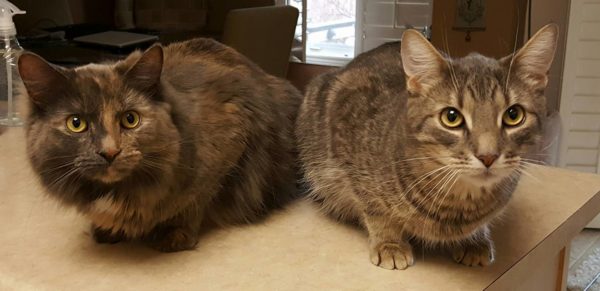
She has had 11 cats thus far, starting with Tiger in the late 70s. Almost all of her cats were rescues. Liz can’t imagine her life without these perfect companions. After her last two cats died, Tilly and Toby, who were 18 and 19, she swore she wouldn’t get any more cats. But all it took was a co-worker showing her a picture of two little kittens looking for a forever home, and two weeks later, they were living with Liz.
And it’s not just cats she loves. She puts unsalted peanuts out for the squirrels, bunnies, chipmunks and birds who pass through her condo garden. Once, she even tried to save a mouse’s life by giving it chest compressions.
Anything, even an injured bird when I was a kid, I’d nurture back to health. I’ve just always had that crazy compassion for anything living.
Animals mean the world to Liz. So, when it came time to update her will, she didn’t have to think for long about the legacy she wanted to leave. Remembering the Ontario SPCA with a gift in her will, which she has supported since the 90s when she was first delighted by the calendar, was as natural as adopting another cat.
Liz’s spirit, love and compassion will extend beyond her lifetime in every creature she’ll aid with her generosity.
My heart is in animal welfare, and I want to make the largest impact I can on the welfare and care and rehabilitation of animals. The gift in my will is going to just one place – the Ontario SPCA.
Dan’s Story
As a lawyer and estate executor, I know how important a will is in making sure your estate is handled the way you want.
Making a will guarantees the assets you’ve worked so hard to earn go where you want them. And adding a gift in your will to a charity like the Ontario SPCA and Humane Society gives you a terrific tax benefit, too!There are so many worthy charities, but I have to say that the Ontario SPCA is a standout for me. They’re trustworthy, reliable, and they make every dollar count towards helping animals. As an animal lover and ‘pet dad’ myself, that matters to me.
The best part about it is that you feel good because you know you’ve done what you want to do, and you know you’ve done the right thing.