November 30, 2025
How to Teach “Crate Training” for Dogs
Learn how to crate train your dog effectively with our step-by-step guide, including practical tips, behaviour strategies, and advice to create a safe, comfortable space for your pet.
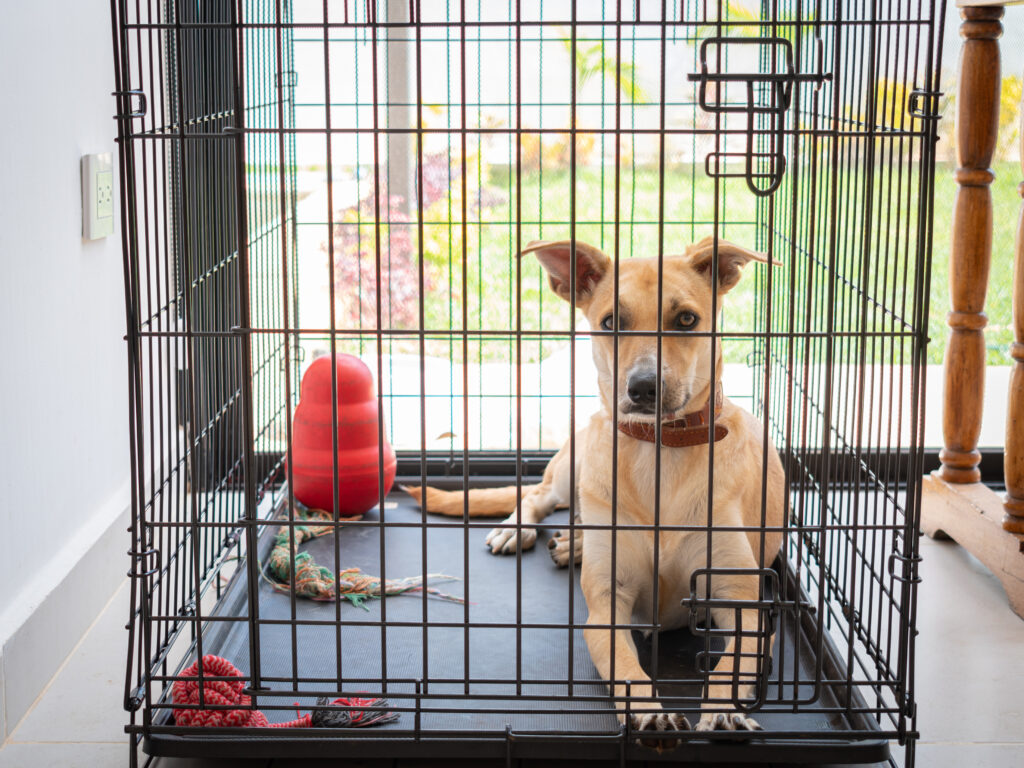

Crate training can be a useful skill to teach your dog to ensure they are comfortable being in a crate. With proper introductions, many dogs find crates to be a safe, familiar space they can go to relax. It’s also a useful skill should they ever need to be in a crate for travel or confinement following a medical procedure.
Here’s What You’ll Need:
- 6’ leash
- Appropriately sized crate – your dog should be able to stand up fully with his/her head held at normal position, turn around easily and lie down without impediment.
- Treat pouch, or bag of bite-sized treats
- High and medium value treats
- Clicker (not necessary, but can be used)
Introducing the Crate:
- Place an appropriately sized crate in your home, ensuring the crate door remains open.
- Start by feeding the dog’s meals in front of the crate. Eventually, move their food dish further to the back of the crate. Make sure to prop the crate door open so it doesn’t close when the dog walks inside.
- Monitor the dog for the first minute of their meals to ensure they do not show signs of fear, anxiety or stress when entering the crate.
Introducing the Crate With Games:
- Start by tossing treats into the open crate using a hand motion (pointing towards or motioning to) and allowing the dog to walk-in and pick-up the treats and then exit.
You may need to start with treats at the front of the crate and then slowly moving them to the back of the crate. - Start increasing the number of treats thrown into the crate.
- While the dog is picking up treats, mark (click or “Yes”) and then toss another treat to increase duration.
- Once the dog is actively entering the crate for treats with their entire body, begin saying “Crate.” Continue practicing this method three to four more times.
- Say “Crate” and use a hand motion, without tossing treats. If the dog enters the crate, mark (click or “Yes”) and reward them inside of the crate.
- Continue these steps until the dog reliably offers walking into crate with the verbal cue.
- Once the dog is consistently going in the crate, ask the dog to enter the crate, mark (click or “Yes”) and reward. A erwards, close the door without latching it and immediately mark and reward. Then, open the crate door.
- If the dog exits, repeat steps 1-6. If the dog stays, repeat step 7.
- Once the dog remains in the crate a er the door is closed and opened, begin adding time before marking, rewarding and opening door. Ensure the dog receives breaks throughout this process.
- Slowly increase the dog’s duration in the crate.
- Slowly add having yourself walking away from the crate before returning, followed by marking and rewarding.
- Slowly begin adding distractions like noise, toys, or other stimuli.
Remember, crate training isn’t suitable for every dog. Always monitor your dog for signs of fear, anxiety, stress or frustration and seek the guidance of a professional trainer or behaviour consultant if you need assistance.