November 30, 2025
How to Teach “Loose-Leash Walking”
Master loose leash walking with your dog using our practical guide, featuring step-by-step training tips, behaviour strategies, and advice for enjoyable, stress-free walks.
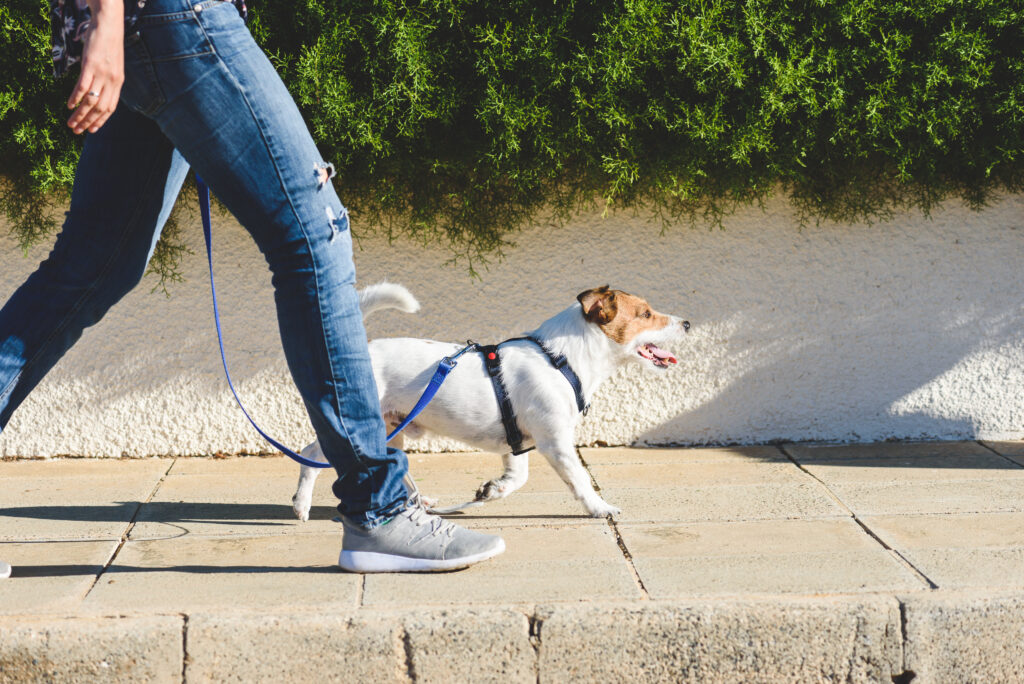

Whether you live in a rural or urban setting, loose-leash walking is an important skill for every dog to learn. It helps develop your dog’s manners and ensures a more enjoyable and safe walking experience.
Pick a place that has minimal distractions to start, and make sure you have plenty of treats. There are many ways to teach loose-leash walking, but this is a quick way that’s easy for most.
Here’s What You’ll Need:
- 6’ leash
- Treat pouch, or bag of bite-sized treats
- High and medium-value treats (treats that we don’t use in other situations)
- Clicker (not necessary, but can be used)
Steps:
- Lure the dog to the side where you would like them to be, mark (click or “yes”) and reward. This lets your dog know they’ve done well in the moment.
- Begin walking, encouraging the dog to follow you.
- Deliver treats while the dog is in the appropriate position. As the dog walks beside you, mark and reward periodically.
- If the dog pulls ahead, stop and wait a moment or until the dog looks back or loosens the tension on the leash, mark (click or “yes”) and continue walking forward.
- If the dog is continuing to pull a er you stop walking, give them a few moments and offer a positive interrupter like a “kissy” noise, then lure them back to your side and start again. If luring them back doesn’t work or they continue to pull, change direction; offer verbal encouragement, and when the dog follows, mark and reward.
- Anytime your dog looks up at you while walking, mark and reward.
- Once the dog is reliably offering the behaviour, add the verbal cue like “Let’s go.”
As the dog becomes more consistent with loose-leash walking, you can increase difficulty by changing environments or slowly add distractions. Remember, this method may not work for every dog or every situation.
If you need additional assistance for more complex needs, please contact a certified trainer or a behaviour consultant.