February 24, 2026
How to teach “place”
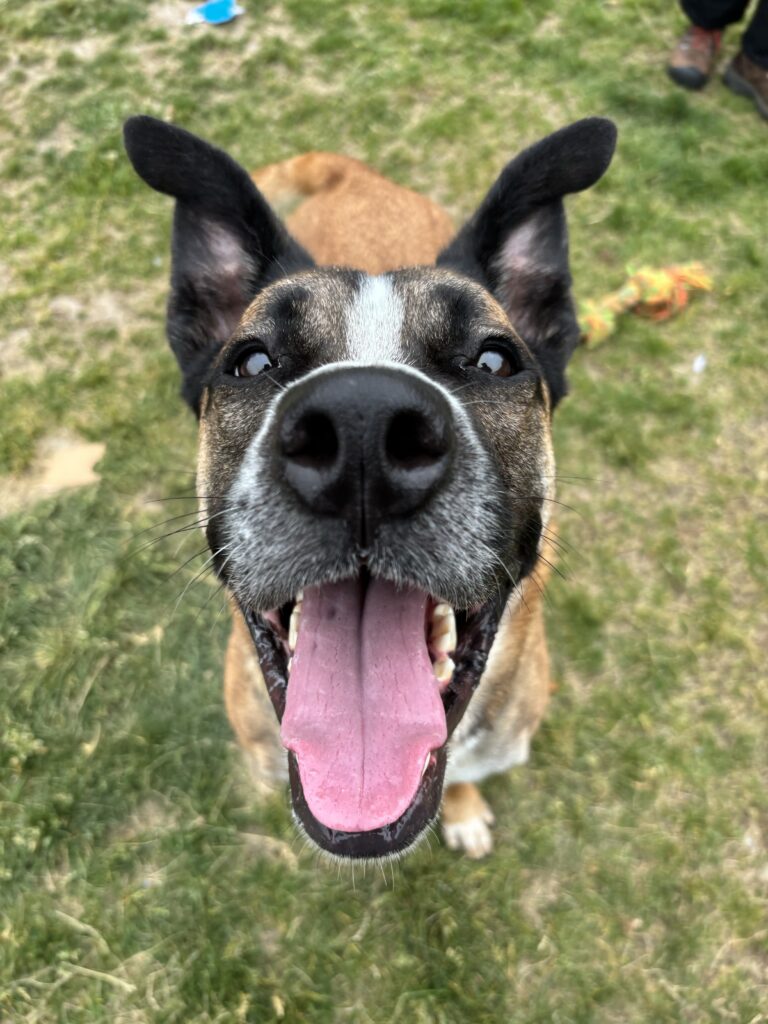


Teaching “place” is a great training technique to help encourage your dog to settle. It encourages your dog to go to a designated spot (such as a bed or mat) and remain there calmly. This is particularly useful when you want your dog to relax and settle down, especially in busy or distracting environments. “Go to place” can help manage your dog’s excitement levels, providing them with a clear cue to calm down and stay in a specific area rather than jumping on guests or getting overly enthusiastic.
It also establishes boundaries for your dog, teaching them where they are expected to be and helping to prevent them from wandering into areas where they shouldn’t be, such as the kitchen during cooking or near a door when visitors arrive.
This cue can be used in various contexts and settings, such as at home, in public places, or during visits to friends’ houses, helping to maintain good behaviour and manners wherever you go.
Remember to keep training sessions short and stop the session before the dog starts to lose interest. We want to set the dog up for success in every stage.
Here’s what you’ll need:
- 6’ leash
- Mat, towel, bed or platform (choose one to use as the dog’s “place”)
- Low distraction area to start with treat pouch, or bag of bite-sized treats
- High value treats
- Clicker (optional)
Step 1: Teaching the down
- While holding the dog’s leash, walk them towards their “place.” The moment the dog steps onto or makes contact, mark (click or “Yes”) but do not release the treat yet. Instead, lure the dog into a down.
- As soon as the dog offers the down, reward by releasing the lure to the ground between their feet.
- Mark and reward with treats a few times before o ering their “release” cue.
Step 2: Teaching a “release” cue
- Give your release cue (say “Release”).
- Remain still; try not to move away or lure the dog.
- The moment the dog gets out of the down position, mark (click or “Yes”), reward, and then move away from the mat while continuing to give treats, praise or play.
- Restart from step 1 until the dog consistently offers an automatic down on their mat. Note: this may only take 3 to 5 reps.
Step 3: Adding the “place” cue
- Once your dog is consistently offering a down on the designated place, start to say the cue “Place” while walking towards the mat.
Step 4: Increasing duration and distance
- As the dog is becoming more consistent and comfortable with the place, start to increase the duration of time before releasing the dog. Ex. wait a few seconds before marking and rewarding.
- Once the dog is able to stay on the place for a while before releasing, you can begin to increase the distance you are from the place, while taking steps away.
Step 5: Increase distance to target
- As you walk your dog up to their place, stop a couple of steps back a er saying “Place.” As long as the dog lands on the mat and o ers their automatic down, mark (click or “Yes”) and reward.
- Continue to add distance between yourself and the mat in increments, as you increase the difficulty of the behaviour.
Teaching “place” enhances your dog’s ability to settle down, focus, and behave appropriately in different situations, contributing to a harmonious relationship between you and your dog. If you need assistance, contact a professional trainer or behaviour consultant.
If this information was helpful, please help us continue to educate about pet health and well-being by making a donation. As a registered charity that does not receive annual government funding, the Ontario SPCA and Humane Society depends on the generosity of donors to change the lives of animals in need.