November 30, 2025
Understanding Out-of-Box Elimination in Cats
Learn how to manage and prevent inappropriate elimination in cats with our comprehensive guide, including causes, behaviour tips, and practical solutions for a happy, healthy home.


What is it?
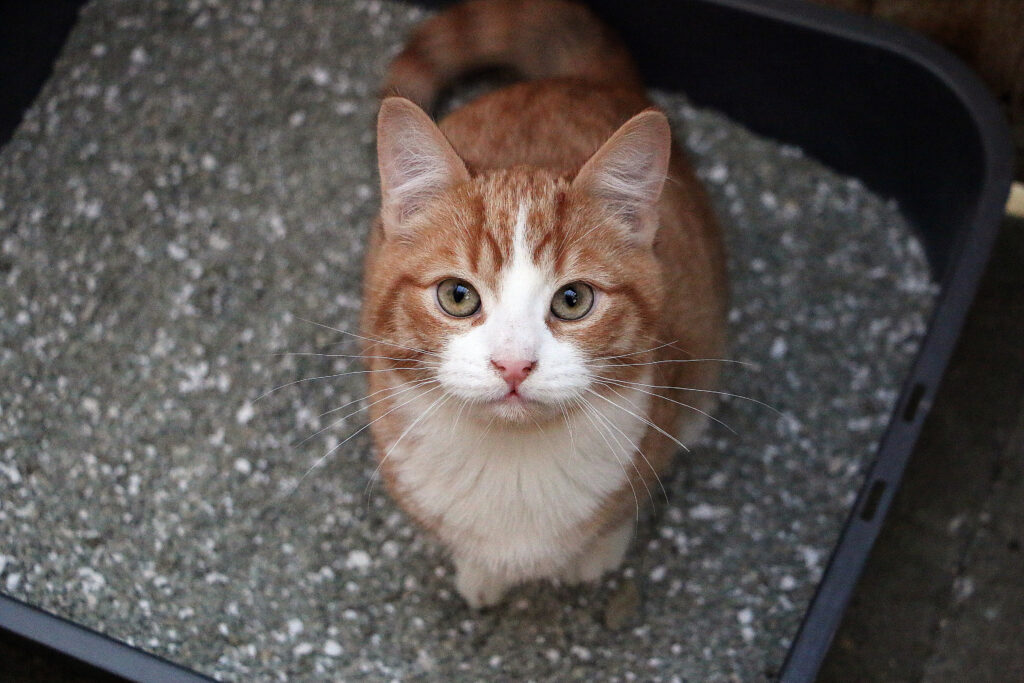
Out-of-box elimination is when cats don’t use their litter box. This common issue can be frustrating for cat adopters and may lead to rehoming considerations. Here’s how to help your cat stay happy and keep your home clean.
First Steps
Check for Health Issues
Take your cat to the vet to rule out health problems like urinary tract infections (UTIs), bladder stones, parasites, and arthritis. These can cause litter box issues.
Create a Cat-Friendly Litter Box Environment
Ensure the litter box is 1.5 times longer than your cat from nose to tail. Most cats prefer clay clumping litter, so consider using that, although preferences vary. Place the litter box in a quiet, low-traffic area and experiment with different depths to see what your cat likes. High sides or covered boxes might be hard for older cats or those with arthritis to use, so try both covered and uncovered options. Keep the box clean by scooping daily and cleaning it regularly.
Track When and Where Your Cat Goes
Keeping a log of your cat’s elimination habits can help you figure out why your cat isn’t using the box.
Look for patterns like:
- Only peeing or only pooping outside the box
- Both peeing and pooping near the box
- Always using the same spot
- Going on certain surfaces
- Going in corners
- Going on personal item
Act quickly! The sooner you address the problem, the less likely it is to become a habit. Remember, cats feel vulnerable using the litter box. Make sure there are multiple exits, and the box is in a low-stress area. Identify any stressors that might be causing the problem.
Solutions for Specific Elimination Issues
Only Peeing or Pooing Near the Box
Some cats need separate boxes for pee and poop. Try adding another box.
Peeing and Pooing Near the Box
This might be a cleanliness issue. Scoop the box multiple times a day and clean it regularly.
- Try different box types. Some cats like covered boxes; others do not.
- Make sure the box is large enough.
Always Using the Same Spot
There may be a stress trigger near the box. Look for anything that might be scaring your cat.
- Move the box to a calmer area.
- Block off the spot where your cat is going or put the litter box there.
Going on Certain Surfaces
Test different types of litter to see what your cat prefers.
- If your cat goes on so surfaces, add more litter to the box.
- If your cat goes on hard surfaces, use less litter or try a pee pad in the box.
Marking Behaviours
Going in Corners
Cats mark their territory by going in corners. Change the association by feeding and playing with your cat in those areas.
- Reduce stressors that might make your cat anxious.
- Give your cat a smaller space to reduce marking.
Going on Personal Items
This might be a form of bonding or repelling. Keep personal items out of reach.
- Have the person your cat is marking against feed, give treats, and play with the cat daily.
- Keep interactions positive and gentle to build trust and a better relationship.
Dealing with out-of-box elimination can be challenging, but with patience and the right approach, you can help your cat overcome this issue. By ensuring a cat-friendly litter box environment, tracking your cat’s elimination habits, and addressing any health or stress-related factors, you can create a more harmonious home for both you and your feline friend.
Remember, every cat is unique, and finding the right solution may take time and experimentation. Stay observant, compassionate, and proactive, and you’ll be well on your way to resolving litter box problems and strengthening the bond with your cat.
If you need further assistance, contact a professional trainer or behaviour consultant.