May 11, 2026
What is interactive play for cats?
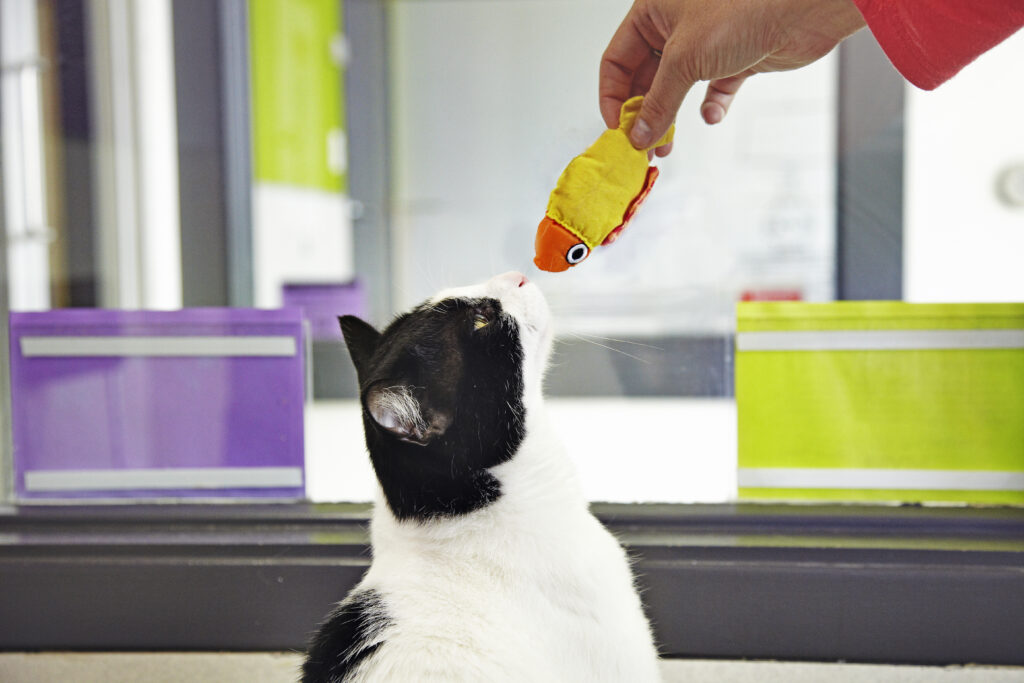

Interactive play involves both you and your cat engaging in playtime. This is more stimulating than when a cat plays alone and ensures they get enough exercise and mental stimulation to stay emotionally healthy. Interactive play mimics hunting and predatory instincts, which helps build confidence and reduces fear, anxiety, stress, frustration, and boredom.
When you provide this type of play, it can greatly decrease the development of unwanted behaviours and increases quality of life by allowing the cat to express natural behaviours. Keep interactive play sessions short (5-10 minutes) and rewarding to encourage future interest.
Here’s what you’ll need:
- Wand toys
- Plastic rolling balls (with or without a bell inside)
- Toys that mimic prey (like mice or birds)
- Laser pointer
Tips for using toys for interactive play:
- Wand toys: Wand toys are great for overstimulated or fearful cats as they keep you at a distance while mimicking the movements of potential prey. Try flicking the wand toy up, swooping it through the air, or slithering it on the ground to see what kind of movement your cat prefers.
- Plastic rolling balls: Throwing or rolling these away or parallel to the cat can be fun for them to chase. These balls can also engage fearful or shy cats by allowing them to watch the movement without forced interaction.
- Toys that mimic prey: Cats often prefer toys that look like prey animals, such as mice or birds. Toys with legs and tails are particularly interesting. Many cats enjoy “hunting” soft toys that they can pounce on and hold in their mouths.
- Laser pointer: Laser pointers can be excellent for visual hunting and physical chasing when used appropriately. Never point the laser at your cat’s face, which can be dangerous. Instead, move it around the environment for them to chase. Always end the laser chase with the beam stopping on a toy so the cat can “catch” the laser and avoid frustration.
Making the toy act like prey
Prey animals typically move away from predators with quick stops, hiding, and darting in different directions. When playing with your cat, try to mimic these movements to make the play more realistic.
Watching is still engaging
Cats might not always want to play, especially if they are experiencing higher levels of fear, anxiety and stress. Watching a toy move without physically chasing it is still a form of interaction and can help build trust.
Allow for a “kill”
Near the end of play sessions, let your cat “make a kill” by catching, pouncing, kicking, or biting the toy to keep the play rewarding and reduce frustration.
Rotating toys or games
Change the type of interactive play or game to maintain your cat’s interest and engagement. Introduce new toys with different scents, movements, or textures. Hide new toys for your cat to discover, making it more fun and appealing than directly giving them the toy.
End play sessions on a positive note
Always end play sessions and “kills” with a treat or a meal (depending on the time of day) to mimic the natural hunting goal of obtaining food and encourage a calm stop to the play. Put interactive toys away between sessions. Wand toys can be dangerous if left out, as the string can be a choking or strangulation hazard. Constantly present toys can become disinteresting, making future play sessions less engaging.
Interactive play is crucial for keeping your cat physically and mentally stimulated. By following these tips and using appropriate toys, you can help your cat express natural behaviours, reduce their stress, fear and anxiety, and enhance their overall quality of life. Remember to keep sessions short, rewarding, and engaging, and always prioritize your cat’s safety by putting toys away when not in use.