AnimalSmart™ Junior Presentations
(Grades 4-6)


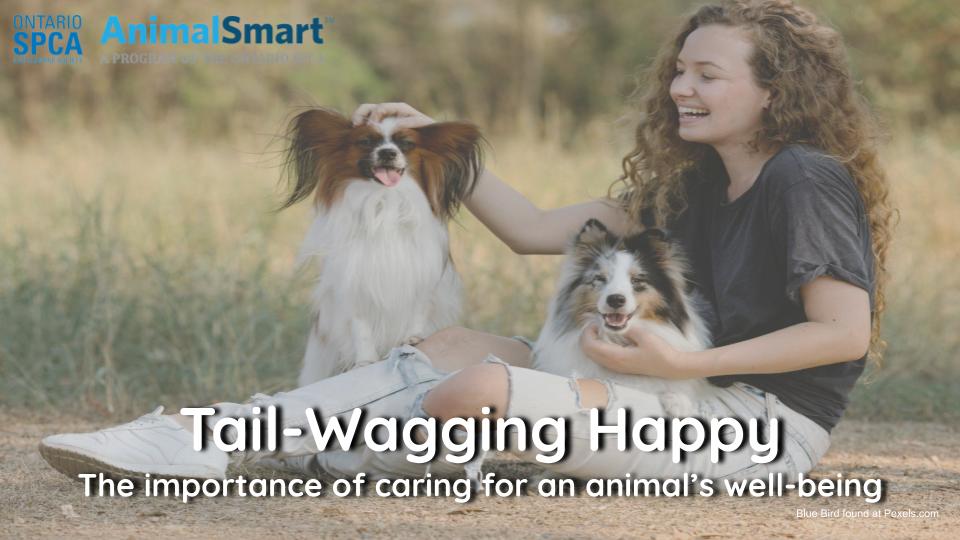
Theme 1: Tail-Wagging Happy – The importance of caring for an animal’s well-being.
Content:
Through the exploration of animals and their specific needs, students will deepen their understanding of providing suitable welfare for companion animals. In our Theme 1 presentations, students will engage in classroom discussions and games, collaboratively defining solutions to address the needs of different animals, fostering a broader perspective on caring for animals.
Learning Objectives:
Upon successful completion of Theme 1, junior students will be able to:
- Understand the importance of their local Ontario SPCA and Humane Society and how they support animals in their community
- Share concrete examples of what animals need to feel safe, happy, healthy, and
loved - Indicate ways in which animals can feel a sense of belonging
- Explain what actions need to be taken before a new animal is brought home
- Share some basic cues that companion animals might use to express certain
emotions - Promote responsible actions to be an animal advocate
Curriculum Connections:
- Social-emotional learning skills
- Transferable literacy skills
- Broader curriculum ties to science
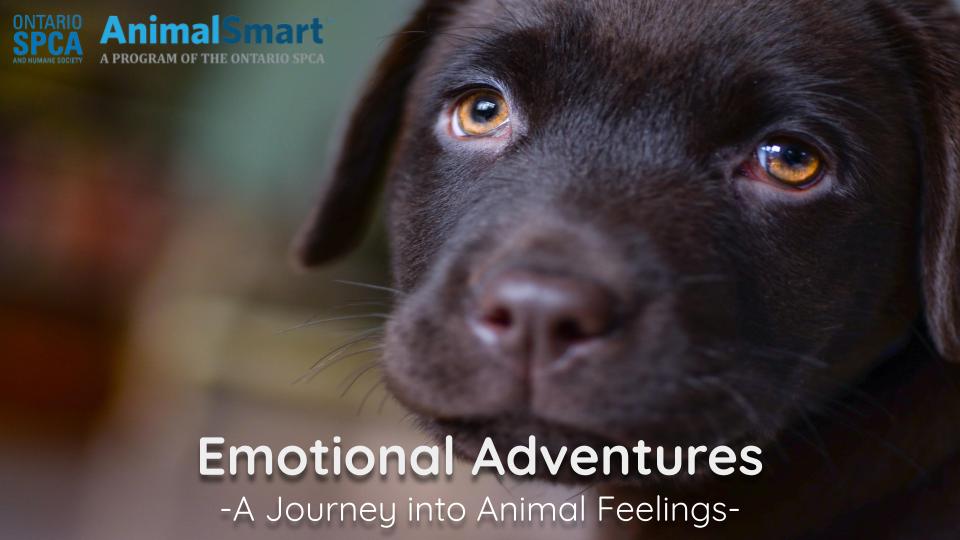
Theme 2: Emotional Adventures – A journey into animal feelings.
Content:
Explore the intricate world of animal communication to recognize animal emotions. In our Theme 2 presentation, students are diving deeper into understanding how animals express their feelings and uncovering the methods they use to communicate with us. Students will further strengthen the connections between human and animal emotions, reinforcing the sense of empathy and compassion they show towards all animals.
Learning Objectives:
Upon successful completion of Theme 2, junior students will be able to:
- Understand the importance of their local Ontario SPCA and Humane Society and how they support animals in their community
- Recognize how animals express their emotions through body language, sounds, and behaviours
- Practice responding appropriately to an animal’s emotional state (e.g. giving space to a scared or anxious animal)
- Explore similarities between how animals and humans experience and express feelings
- Cultivate empathy by seeing animals as sentient beings with emotions
- Improve their relationship skills by understanding how trust is built through consistent, kind actions – whether with animals or friends
- Understand that animals’ emotional well-being is as important as their physical well-being, and become advocates for their care
Curriculum Connections:
- Broader curriculum ties to science
- Social-emotional learning skills
- Transferable literacy skills
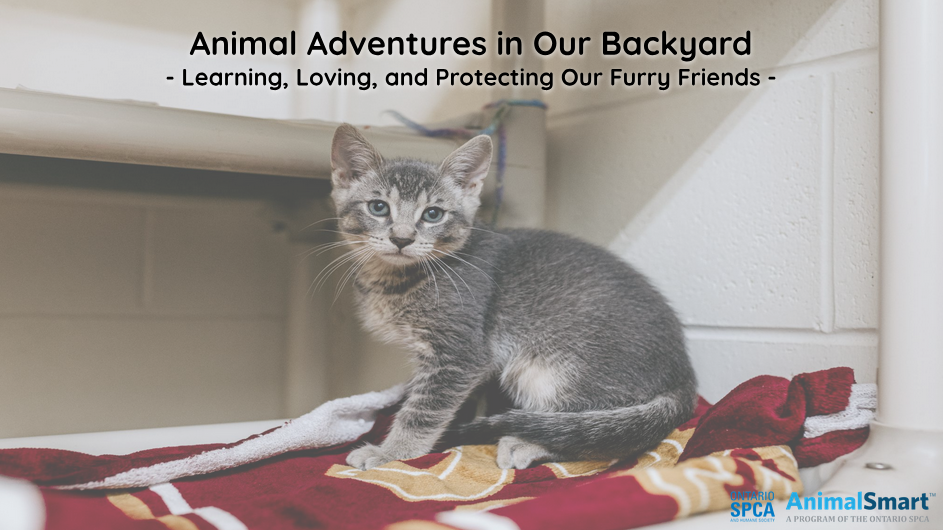
Theme 3: Animal Adventures in our Backyard – Learning, loving, and protecting our furry friends.
Content:
In this fun and engaging presentation, kids will learn about the helpful community programs offered by the Ontario SPCA and Humane Society beyond pet adoptions, explore various pet services in our community like pet stores and vet offices, focusing on all the ways they support healthy animals, and understand how to safely interact with animals they encounter in public. This “choose your own adventure” style presentation takes students through group discussions, games and moments of reflection as a way to inspire a love for animals and teach important safety tips for young animal lovers.
Learning Objectives:
Upon successful completion of Theme 3, junior students will be able to:
- Identify organizations or services in their community that support companion animals
- Understand the direct positive impact the Ontario SPCA and Humane Society has on their community
- Cultivate empathy for animals and recognize their role in the community
- Practice safe habits/actions for approaching unfamiliar animals in their community
- Identify companion animal body language and how to respect their boundaries
- Identify how companion animals communicate with humans
- Promote responsible actions to be an animal advocate
Curriculum Connections:
- Broader curriculum connections to social sciences
- Social-emotional learning skills
- Transferable literacy skills