What is it?
Petting aggression in cats occurs when a cat becomes overstimulated during petting or handling, leading to defensive or aggressive behaviour. This can happen if a cat is petted for too long or in a way they don’t enjoy.
It’s a common behaviour seen in many cats.
All cats have different tolerance levels for petting and handling. Some may enjoy lots of interaction, while others prefer minimal contact. Overstimulation can vary in severity, so it’s crucial to recognize the signs and avoid situations that could escalate to petting aggression.
Other Causes of Petting Aggression
Cats may also become aggressive during petting due to fear or past negative experiences with handling. If a cat wasn’t exposed to positive interactions with people during their socialization period (3-16 weeks of age), they may be more prone to fear, anxiety, and stress when approached or handled. Pain, such as sensitivity in certain areas, and boredom or lack of enrichment can also contribute to petting aggression.
Recognizing the Signs
Watch for these common body language cues that may indicate impending petting aggression:
- Tail swishing
- Skin twitching over the back
- Flattening of ears
- Dilated pupils
- Excessive rubbing against objects or people
- Restlessness or walking away
- Low growling
- Swatting, chasing, or biting if overstimulation continues
Reducing the Chance of Petting Aggression
If you notice signs of overstimulation or aggression, stop petting immediately and use de-escalation techniques. Keep petting sessions short and avoid sensitive areas. Start with gentle petting on the side of the cat’s face and monitor their body language closely. Allow the cat to dictate how much interaction they want and where they prefer to be petted.
Understanding Your Cat’s Preferences
Every cat is unique in their preferences for handling and petting. Some may enjoy being petted on their chin or under the ears, while others prefer no direct touching, but appreciate proximity. Respect your cat’s boundaries and give them time to decompress after interactions.
Increasing Enrichment and Play
If boredom contributes to overstimulation, provide daily play and mental stimulation. Interactive toys, scratching posts, and environmental enrichment can help alleviate fear, anxiety and stress by allowing cats to express natural behaviours and expend energy.
Desensitization and Counter Conditioning
Developing a plan for desensitization and counter conditioning can also help reduce petting aggression. Gradually associate petting with positive experiences, such as offering treats or playtime after gentle strokes, to change your cat’s perception of handling.
Understanding and managing petting aggression in cats requires patience and attentiveness. By respecting your cat’s limits, providing enrichment, and using positive reinforcement techniques, you can create a positive interaction environment that benefits both you and your feline companion.
If you need additional assistance, contact a professional trainer or behaviour consultant.
What is it?
Out-of-box elimination is when cats don’t use their litter box. This common issue can be frustrating for cat adopters and may lead to rehoming considerations. Here’s how to help your cat stay happy and keep your home clean.
First Steps
Check for Health Issues
Take your cat to the vet to rule out health problems like urinary tract infections (UTIs), bladder stones, parasites, and arthritis. These can cause litter box issues.
Create a Cat-Friendly Litter Box Environment
Ensure the litter box is 1.5 times longer than your cat from nose to tail. Most cats prefer clay clumping litter, so consider using that, although preferences vary. Place the litter box in a quiet, low-traffic area and experiment with different depths to see what your cat likes. High sides or covered boxes might be hard for older cats or those with arthritis to use, so try both covered and uncovered options. Keep the box clean by scooping daily and cleaning it regularly.
Track When and Where Your Cat Goes
Keeping a log of your cat’s elimination habits can help you figure out why your cat isn’t using the box.
Look for patterns like:
- Only peeing or only pooping outside the box
- Both peeing and pooping near the box
- Always using the same spot
- Going on certain surfaces
- Going in corners
- Going on personal item
Act quickly! The sooner you address the problem, the less likely it is to become a habit. Remember, cats feel vulnerable using the litter box. Make sure there are multiple exits, and the box is in a low-stress area. Identify any stressors that might be causing the problem.
Solutions for Specific Elimination Issues
Only Peeing or Pooing Near the Box
Some cats need separate boxes for pee and poop. Try adding another box.
Peeing and Pooing Near the Box
This might be a cleanliness issue. Scoop the box multiple times a day and clean it regularly.
- Try different box types. Some cats like covered boxes; others do not.
- Make sure the box is large enough.
Always Using the Same Spot
There may be a stress trigger near the box. Look for anything that might be scaring your cat.
- Move the box to a calmer area.
- Block off the spot where your cat is going or put the litter box there.
Going on Certain Surfaces
Test different types of litter to see what your cat prefers.
- If your cat goes on so surfaces, add more litter to the box.
- If your cat goes on hard surfaces, use less litter or try a pee pad in the box.
Marking Behaviours
Going in Corners
Cats mark their territory by going in corners. Change the association by feeding and playing with your cat in those areas.
- Reduce stressors that might make your cat anxious.
- Give your cat a smaller space to reduce marking.
Going on Personal Items
This might be a form of bonding or repelling. Keep personal items out of reach.
- Have the person your cat is marking against feed, give treats, and play with the cat daily.
- Keep interactions positive and gentle to build trust and a better relationship.
Dealing with out-of-box elimination can be challenging, but with patience and the right approach, you can help your cat overcome this issue. By ensuring a cat-friendly litter box environment, tracking your cat’s elimination habits, and addressing any health or stress-related factors, you can create a more harmonious home for both you and your feline friend.
Remember, every cat is unique, and finding the right solution may take time and experimentation. Stay observant, compassionate, and proactive, and you’ll be well on your way to resolving litter box problems and strengthening the bond with your cat.
If you need further assistance, contact a professional trainer or behaviour consultant.
No matter what the weather, your dog probably enjoys having a romp outside – and that includes during the winter! But as their caregiver, it’s important you know when your dog is too cold and needs to get back inside.
Remember to never leave your dog unattended inside a car at any time of year, but especially in the heat of summer and cold of winter.
If you’re playing outside with your dog, make sure to take frequent indoor breaks for your dog to warm up and hydrate.
Signs that can indicate your dog is too cold:
- Shaking or shivering
- Hunched posture with a tucked tail
- Whining or barking
- Change in behaviour, like seeming anxious or uncomfortable
- Reluctance to keep walking or tries to turn around
- Seeks places for shelter
- Holds paws up off the ground
Prolonged exposure to the cold can result in frostbite and hypothermia (drop in body temperature). If you think your furry friend is developing frostbite or hypothermia, wrap them in a blanket or coat, seek a warm shelter and immediate veterinary support.
Signs include:
- Frostbite (can take several days to develop)
- Often presents on the extremities (ears, legs, paws, tail)
- Pale, cold skin that can be painful to touch
- May develop redness, swelling and blisters of exposed skin
- Skin may turn black
- Hypothermia (can range from mild to severe)
- Prolonged shivering
- Weakness
- Muscle stiffness
- Difficulty walking
- Pale gums
- Confusion
- Slow, shallow breathing
- Loss of consciousness
Though it’s important to pay attention to these things, you shouldn’t wait to see the first signs of discomfort to call your walk or playtime quits. While maintaining your dog’s exercise requirements during the winter is important, when conditions are especially cold, it’s a good idea to cut your walk short and supplement your animal’s exercise with some indoor activities and enrichment.
Check out our safety tips for winter walks.
If this information was helpful, please help us continue to educate about pet health and well-being by making a donation. As a registered charity that does not receive annual government funding, the Ontario SPCA and Humane Society depends on the generosity of donors to change the lives of animals in need.
At only five months old, a Cane Corso mix named Pogo has already shown more resilience and joy than many see in a lifetime. Her journey began with a tragic accident, but thanks to compassionate caregivers and her unstoppable spirit, Pogo is now thriving in a loving home.
Tragic accident leads to new beginnings
Pogo first arrived in our care after an e-bike was accidentally dropped on her leg. The impact caused a severe break, leaving Pogo unable to bear weight on her right hind limb. Wanting to do what was best for their puppy, her pet parents made the decision to rehome her so she could receive the medical treatment she desperately needed and find a home who could provide the care she needed for life.
When Pogo arrived at the Ontario SPCA York Region Animal Centre, staff immediately recognized the severity of her condition. She had a cut close to her right kneecap and couldn’t put any weight on her leg. X-rays revealed a fracture of the lower femur and a sizable bone fragment in the upper tibia. It was clear that surgery would be required.
Adapting to a new life
Due to the complexity and extent of the damage, the veterinary team determined that amputation of Pogo’s right hind leg would give her the best chance at a healthy, pain-free life. The surgery was successful, and to the amazement of everyone involved, Pogo adapted to her new three-legged lifestyle almost immediately.
“Throughout everything, she kept her sweet, happy, playful puppy energy,” says Crystal Brain. Manager, York Region Animal Centre. “Pogo was so tolerant of all the rechecks and recovery steps.”
Once healed, Pogo was made available for adoption, and she didn’t have to wait long. A loving couple fell head over heels for her bright personality and Pogo is now enjoying the carefree puppyhood she deserves.
“Pogo’s journey has been a powerful reminder of the resilience and innocence that animals carry so deeply,” says Crystal. “Even after everything she’d been through, she remained the sweetest girl – gentle, trusting, and full of quiet strength. Watching her make a full recovery and go on to live a happy, healthy life has been incredibly moving for all of us.”
Pogo’s journey is proof that animals with special needs have so much love to give.
As a registered charity that does not receive annual government funding, the Ontario SPCA and Humane Society depends on the generosity of donors to change the lives of animals in need. Please consider donating today.
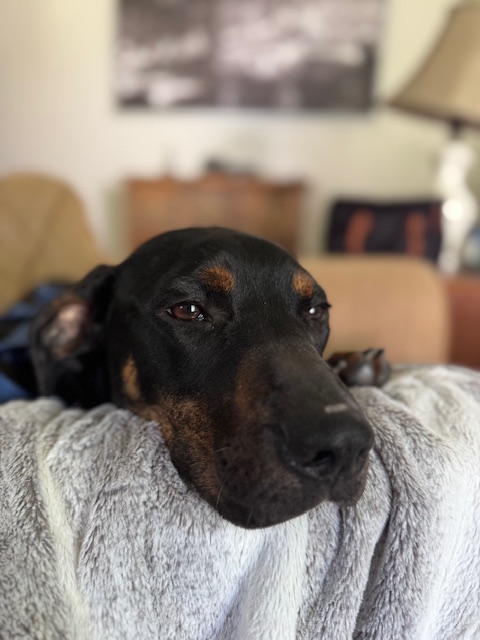
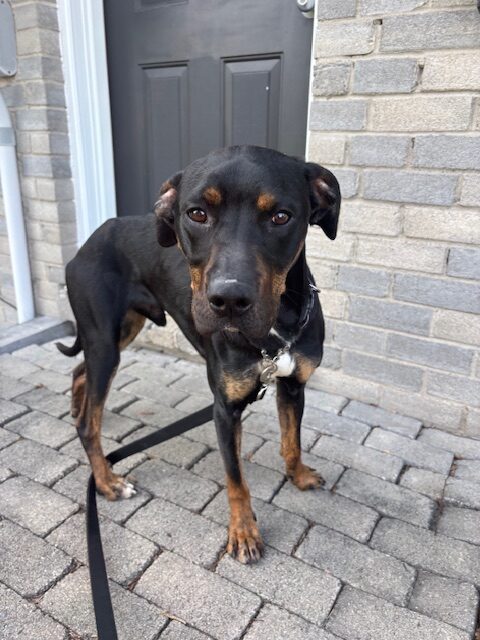
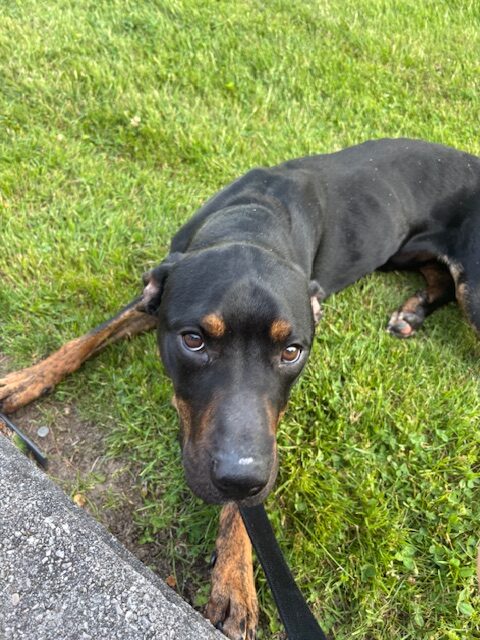
When Thor first arrived in the care of the Ontario SPCA and Humane Society, he was in rough shape. The eight-month-old Rottweiler mix was rail thin, weighing in at just 17.5 kg – much lower than the 35 kg that a dog his size should weigh.
A grim beginning
Becky Harvey, Manager of the Ontario SPCA Lennox & Addington Animal Centre, remembers his arrival vividly.
“He was very thin, and we started him on a re-feeding program,” says Becky. “Slowly, he began to gain weight, went into foster, and did very well.”
After nearly a month in care, Thor reached 18.5 kg and continued to progress steadily. With time, patience, and dedicated care from his foster family, Thor regained his strength and spirit.
Once Thor was healthy enough to find a loving home, it wasn’t long before he caught the eye –and heart – of an adopter. A gentleman named Allen was looking for a companion to share the road of life with and he fell in love with Thor.
A brighter future
Thor settled into his new home with ease.
“He’s adapting well and is full of energy and healing quickly,” says Allen.
Thor also quickly bonded with his two feline roommates. Most days, you can find Thor trotting along behind Allen as he goes about his routine, with the cats following close behind.
“They all get along really well, even though he chases them once in awhile,” says Allen. Now healthy, happy, and growing fast, Thor loves nothing more than playing fetch in the yard and being part of a family that cherishes him.
“I’m all for the work the Ontario SPCA does,” says Allen.
From a life of uncertainty to a future filled with affection, Thor’s story is a beautiful reminder of how compassion and second chances can change a life.
As a registered charity that does not receive annual government funding, the Ontario SPCA and Humane Society depends on the generosity of donors to change the lives of animals in need. Please consider donating today.
What an exciting time! Adopting a new friend can be a big responsibility, and we want to help ensure each animal is set up for success in their new home. We encourage you to keep the following tips in mind when you bring home your new rat.
A check-in with your family veterinarian within the first week after adoption is critical to ensure continuity of care for your new friend, and to create a preventative health care plan tailored to their specific needs and to your lifestyle. The goal is to prevent future disease and illness, which will ideally also help reduce future costs of care.
Medical Considerations
Many veterinarians do not treat rats, so it is highly recommended to find a suitable veterinarian before care is needed. The Ontario SPCA does not spay or neuter rats. Surgery can successfully be performed, but it is best done through a veterinarian who has rat surgical experience. Your rat’s teeth will grow continuously throughout their life. Provide your rats
with chewing items such as cardboard and wooden toys. Your rat’s nails will need to be trimmed regularly.
Housing
When selecting a cage for a rat, multi-level cages are preferred as they allow your rat to express natural behaviours. The best location for the cage is inside, away from drafts, direct sunlight, and extreme temperatures, and off the floor to decrease stress. Your rat’s enclosure
should have a solid bottom floor and be lined with bedding, which rats will use to make resting nests, burrow within, snuggle, and re-arrange throughout their cage. Rats need somewhere to hide where they can relax without being seen. And since rats are naturally nocturnal, they benefit from a darker area to sleep or nap during the day.
Nutrition
Rats are omnivores, which means they eat both plant and animal matter. Quality commercial pet rat pellets should make up the vast majority of their diet. Seed and grain mixtures should be avoided. Although your rat friend enjoys fresh vegetables and fruit, they should only be given occasionally as a healthy treat. Rats must have access to water 24/7. This can be done by using a sipper bottle attached to the side of their cage, or a ceramic water bowl.
Enrichment
Your rat enjoys activities that allow them to express their natural behaviours, such as hiding, climbing, constructing and chewing. Enrichment is very important to help keep your rat happy and healthy.
If you have questions or concerns post-adoption, please contact your local Ontario SPCA and Humane Society animal centre.
What an exciting time! Adopting a new friend can be a big responsibility, and we want to make sure each animal is set up for success in their new home. We encourage you to keep the following tips in mind when you bring home your new guinea pig.
A check-in with your family veterinarian within the first week after adoption is critical to ensure continuity of care for your new friend, and to create a preventative health care plan tailored to their specific needs and to your lifestyle. The goal is to prevent future disease and illness, which will ideally also help reduce future costs of care.
Medical Considerations
Regular veterinary visits are recommended to prevent illness and to keep your new guinea pig as comfortable as possible. Because many veterinarians do not treat guinea pigs, it is highly recommended to find a suitable veterinarian before care is needed. The Ontario SPCA does not
spay or neuter guinea pigs. Surgery can successfully be performed, but it is best done through a veterinarian who has guinea pig surgical experience. Your guinea pig requires Vitamin C in their diet to prevent scurvy. As a rodent, your guinea pig’s teeth will grow continuously throughout their life. To help wear down their ever-growing front teeth, provide your guinea pigs with chewing items such as cardboard and wooden toys. Your guinea pig’s nails will also need to be trimmed regularly.
Housing
When selecting a cage for a guinea pig, bigger is always best. Your guinea pig friend is highly social and typically will enjoy human interaction. Because they are social, another guinea pig companion would be beneficial. Having another guinea pig of the same sex is strongly encouraged. In general, females tend to get along well. Enclosures should have solid bottoms and be covered with shredded newspaper, grass hay, aspen or hardwood shavings. Guinea pigs will usually choose one area as the toilet area. Once they have selected this area, don’t put food, water or toys in the space. As guinea pigs are startled easily, a hiding place must always be provided. Enclosures should remain off the floor to decrease stress.
Nutrition
The majority of a guinea pig’s diet is Timothy hay, which should always be available. Pelleted diets made specifically for guinea pigs, vegetables, and small amounts of fruit account for the rest of a guinea pig’s dietary needs. Guinea pigs are unable to create vitamin C on their own, so this needs to come from their diet.
Enrichment
Your guinea pig enjoys activities that allow them to express their natural behaviours, such as hiding, climbing, constructing and chewing. Enrichment is very important to help keep your guinea pig happy and healthy.
If you have any questions or concerns post-adoption, please reach out to your local Ontario SPCA and Humane Society animal centre.
What an exciting time! Adopting a new friend can be a big responsibility and we want to help ensure each animal is set up for success in their new home. We encourage you to keep the following tips in mind when you bring home your new bird.
A check-in with your family veterinarian within the first week after adoption is critical to ensure continuity of care for your new friend, and to create a preventative health care plan tailored to their specific needs and to your lifestyle. The goal is to prevent future disease and illness, which will ideally also help reduce future costs of care.
Housing
The housing size for birds should be as large as you can accommodate. There must be enough space for your bird to stretch their wings out fully and to fly short distances. Different bird species require different types of cages. To make your bird feel safe, keep the cage off the floor at all times. Cages should have a variety of perches. Birds can benefit from supervised time out of their cage in a safe environment. To keep your bird safe, ensure the environment is free from items that are chewable, keep all windows and doors closed and keep other animals out of the room.
Nutrition
Every bird species has different dietary requirements, so it is best to consult a veterinarian for specific information about your bird. A proper diet promotes good health and can help avoid medical conditions. A good diet generally consists of a high-quality pellet, a variety of fruits, vegetables and grains, and a small amount of seed.
Enrichment
As intelligent and inquisitive species, companion birds can get bored easily, so rotating toys and providing novel enrichment opportunities is critical to their health. Many birds do best with another bird companion, of either the same species or a compatible one. This is especially true if the family works away from the home and the bird is left alone for large portions of the day.
If you have questions or concerns post-adoption, please reach out to your local Ontario SPCA and Humane Society animal centre.
What an exciting time! Adopting a new friend can be a big responsibility and we want to help ensure each animal is set up for success in their new home. We encourage you to keep the following tips in mind when you bring home your new rabbit.
A check-in with your family veterinarian within the first week after adoption is critical to ensure continuity of care for your new friend, and to create a preventative health care plan tailored to their specific needs and to your lifestyle. The goal is to prevent future disease and illness, which will ideally also help reduce future costs of care.
Medical Considerations
As a hind-gut fermenting species, the health of the “good” gut bacteria is directly related to the rabbit’s health. Any digestive disturbances can be catastrophic for rabbits and must be addressed by your family veterinarian. Your rabbit’s teeth will grow continuously throughout their life. To help wear down their ever-growing front teeth, provide your rabbits with chewing
items such as cardboard and wooden toys. Regular visits to your family veterinarian are important to identify if the teeth need to be trimmed. Your rabbit’s nails will need to be trimmed regularly.
Housing
When selecting a cage for a rabbit, bigger is always best. This will allow your rabbit to express natural behaviors, which will decrease stress. Your rabbit should have access to an exercise pen daily, where they can stretch and jump around with more space. They should not be limited to just their cage. Enclosures should have solid bottoms. They can be covered to prevent foot injuries with shredded newspaper, grass hay, aspen or hardwood shavings. Avoid using wood shavings made from pine or cedar, as they can be very irritating to their respiratory system. A hiding place must be provided for your rabbit for when they need some quiet time. Enclosures should remain off the floor to decrease stress.
Nutrition
When you feed your rabbit, a proper diet is essential to keep them healthy. Rabbits are herbivores and require a high-fibre diet to ensure good gastrointestinal health. The majority of a rabbit’s diet should consist of unlimited, high-quality Timothy hay, which should always be available. A smaller amount of fresh vegetables and a limited amount of pellets should be offered with the occasional treat.
Enrichment
Rabbits enjoy activities that allow them to express their natural behaviours, such as hiding, climbing, constructing and chewing. Enrichment is very important to help keep your rabbit happy and behaviourally healthy. Rabbits need at least an hour out of their cage every day. Your rabbit may enjoy a walk indoors with a harness or hop around a pen, but don’t let the rabbit roam your home unsupervised – rabbits love to chew! Rabbits are quite social and need quality interaction every day.
If you have questions or concerns post-adoption, please reach out to your local Ontario SPCA and Humane Society animal centre.
What an exciting time! Adopting a new friend can be a big responsibility, and we want to make sure each animal is set up for success in their new home. We encourage you to keep the following tips in mind when you bring home your new dog or puppy.
A check-in with your family veterinarian within the first week after adoption is critical to ensure continuity of care for your new friend, and to create a preventative health care plan tailored to their specific needs and to your lifestyle. The goal is to prevent future disease and illness, which will ideally also help reduce future costs of care.
Environment
Set up a well-ventilated crate or a separate doggie-proofed room for your new dog or puppy. It’s one of the easiest ways to help them successfully transition into your home. Make this a positive space, not a form of punishment. The goal is to provide a quiet retreat and/or to help
with housetraining. Remember, the dog must be allowed appropriate breaks (every few hours) for feeding and potty breaks, as well as lots of time spent out of the crate or room for walks, training and playtime.
Vaccines
Vaccines play a vital role in protecting your new dog or puppy from diseases that can be devastating to their health, as well as keeping other furry and human family members safe. Core vaccines for dogs include DA2PP (distemper, adenovirus (hepatitis), parainfluenza, parvovirus) and rabies. Rabies vaccination is a legal requirement. All dogs adopted from
the Ontario SPCA have received their rabies vaccination, provided they are old enough to receive it at the time of adoption.
Disease Testing
Heartworm & Tick-Borne Illness: Mosquitoes and ticks can transmit diseases to dogs. There is a blood test to screen for exposure to heartworm and tick-borne illness. This is not something your dog has received yet and, based on lifestyle and age, may be recommended by your veterinarian. Internal and External Parasites: Your new furry friend has received routine deworming and external parasite prevention prior to adoption, but further doses may be required. Please follow up with your family veterinarian for testing and treatment moving forward.
Dog-to-Dog / Cat Introductions
Dogs can safely be introduced to one another with some positive encouragement and body language awareness. With time, many cats and dogs can learn to coexist peacefully and may even become friends!
If you have questions or concerns post-adoption, please reach out to your local Ontario SPCA and Humane Society animal centre.
What an exciting time! Adopting a new friend can be a big responsibility, and we want to help ensure each animal is set up for success in their new home. We encourage you to keep the following tips in mind when you bring home your new cat or kitten.
A check-in with your family veterinarian within the first week after adoption is critical to ensure continuity of care for your new friend, and to create a preventative health care plan tailored to their specific needs and to your lifestyle. The goal is to prevent future disease and illness, which will ideally also help reduce future costs of care.
Environment
Creating a safe space for your new cat is very important. Remove any toxic plants and hide any electrical cords that the cat might have access to. Set up your cat’s litter box, bowls, scratching post and toys in a quiet, safe place for the first week or two. Once home, adopters are encouraged to reassemble the cat cabin from the animal centre, as it has the cat’s scent on it and helps ease their transition into their new home by offering a familiar place to perch, sleep, hide and rub. We recommend keeping cats indoors.
Vaccines
Vaccines play a vital role in protecting your new cat or kitten from diseases, as well as keeping other furry and human family members safe. Core vaccines for cats include FVRCP (feline herpes virus, calicivirus & panleukopenia) and rabies. Rabies vaccination is a legal
requirement. All cats adopted from the Ontario SPCA have received their rabies vaccination, provided they are old enough to receive it at the time of adoption.
Disease Testing
Retroviruses like Feline Leukemia Virus (FeLV) and Feline Immunodeficiency Virus (FIV) are transmitted between cats. If you have a multi-cat household, testing prior to introducing your new cat should be discussed with your veterinarian.
Internal and External Parasites
Your new furry friend has received routine deworming and flea prevention prior to adoption, but further doses may be required. Talk to your veterinarian about future testing and prevention. We also recommend that other family pets be tested and treated for internal and
external parasites prior to bringing your new furry friend home.
Cat-to-Cat / Dog Introductions
Retroviruses like Feline Leukemia Virus (FeLV) and Feline Immunodeficiency Virus (FIV) are transmitted between cats. If you have a multi-cat household, testing prior to introducing your new cat should be discussed with your veterinarian.
If you have any questions or concerns post-adoption, please reach out to your local Ontario SPCA and Humane Society animal centre.
At the Ontario SPCA and Humane Society, we know that pets rely on us to protect their safety, and carbon monoxide (CO) poisoning is an often overlooked risk. Because animals may show signs before pet parents, they can act as early warning signs for your household.
Protecting your pet from CO not only keeps them safe, but it could also save your life too.
What is carbon monoxide and why are our pets at risk?
Carbon monoxide (CO) is a colourless, odourless, tasteless gas produced whenever a fuel-burning appliance or engine (gas, oil, wood, charcoal, propane) is not fully ventilated.
Because pets are typically smaller, breathe faster, and often spend more time indoors or closer to the floor level of rooms, they may show signs of CO exposure before humans do.
If CO builds up in your home, garage, or other enclosed space, the results can be sudden and severe for both animals and people.
The signs to watch for in your pet
When it comes to pets, symptoms of CO poisoning may be subtle and can easily be mistaken for something else. That’s why vigilance and awareness are key. Typical signs include:
Behavioural changes
- Unexpected agitation, anxiety, restlessness, or clinginess.
- Refusing to enter the house or room where they normally feel comfortable.
- Lethargy, sleepiness, or seeming “out of sorts” for no clear reason.
Physical symptoms
- Vomiting, nausea, or loss of appetite.
- Uncoordinated movements, stumbling, weakness.
- Difficulty breathing (rapid, shallow, or laboured breaths).
- Bright cherry-coloured gums, ears or lips (a less common sign but notable).
- In extreme cases: seizures, coma, collapse, or permanent damage (hearing, vision, brain).
If you notice any of these signs, especially in conjunction with a change in environment, such as heating turned on, closed windows, appliance running, treat it as an urgent issue.
What to do if you suspect exposure
- Immediately move your pet and yourself to fresh air.
- Call your veterinarian and describe the symptoms and circumstances.
- If it’s safe to do so, shut off fuel-burning appliances,and open windows and doors to ventilate. Avoid re-entering the space until cleared.
- If required, veterinary treatment may include oxygen therapy, monitoring and support for any complications.
- After the emergency, investigate the source of CO to prevent recurrence.
Prevention
Here are steps every household in Ontario should take to reduce the risk of CO poisoning for pets and people:
- Install properly certified CO alarms on every level of your home, especially near sleeping areas.
- Test CO alarms frequently and replace them or batteries as recommended.
- Service fuel-burning appliances annually (furnaces, water heaters, fireplaces, stoves). Ensure proper venting and no blockages from snow, nests, or lint.
- Never leave a vehicle running in a closed or attached garage, even with the door open, and never let pets stay in there while the engine runs.
- Never use outdoor fuel-burning devices indoors (barbecues, camp stoves, portable heaters) or in unvented spaces.
- Be extra vigilant during cold weather when windows are closed and heating systems are in use.
- Include your pet in your emergency and safety planning.
If your pet displays sudden behaviour or physical changes, especially during the winter months and when fuel burning appliances are used, don’t wait. Give them fresh air, seek veterinary care, and check your appliances and detectors. Prevention saves lives.
Let’s keep our fur family safe this season..
If this information was helpful, please help us continue to educate about pet health and well-being by making a donation. As a registered charity that does not receive annual government funding, the Ontario SPCA and Humane Society depends on the generosity of donors to change the lives of animals in need.