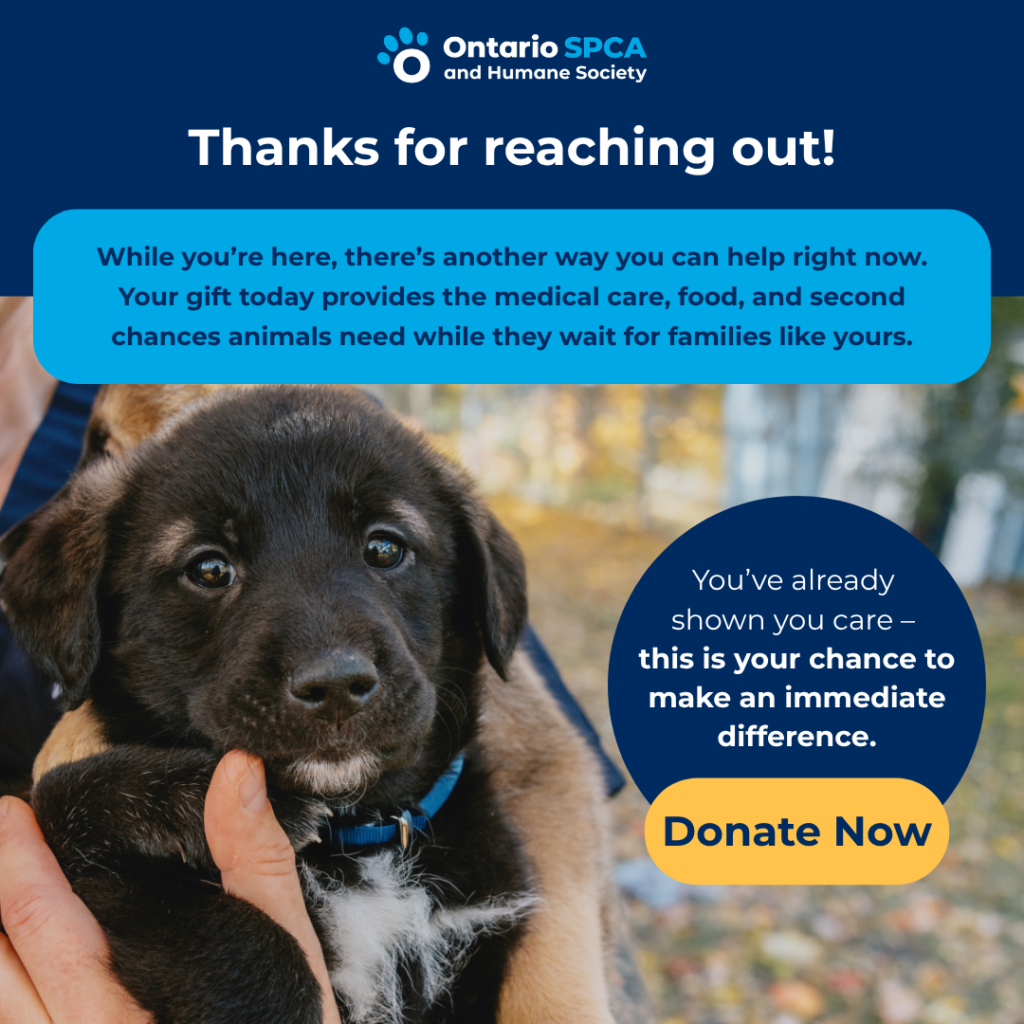
Dogs are exceptional animals, and their ability and desire to form deep and loving bonds with humans is extraordinary. By adopting, you are truly giving a dog an amazing gift – a second chance.
Following an adoption, it may take a few weeks or months for you and your dog to fully adjust to your new life together, and to establish a relationship based on mutual understanding, trust and respect. Be patient. Remember, there is a reason you’ve chosen this dog, or they have chosen you!
The following adoption tips will help you bring out your dog’s superstar qualities.
Help your dog relax at home alone
Adopted dogs usually form deep bonds with their new parents, and in the beginning, separation may be emotional for you both. Help give your dog the confidence to be home alone by incorporating the following confidence-building tips into their day. Begin using these tips as soon as you bring your new friend home.
- Leave the house frequently for short periods by walking out the door, closing it, and then returning. Once your dog is comfortable with short departures, randomly include some longer departures.
- Ignore your dog during departures and arrivals (be very casual – don’t look back!).
- Practice mini departures inside by closing doors when you take a shower, use the bathroom, etc.
- Studies have shown that dogs are calmed by classical music, so consider changing your radio station.
- Try to stay relaxed (if you’re anxious, your dog’s anxiety will increase).
- Give your dog a safe chew toy stuffed with treats before you leave the house.
A dog with severe separation anxiety may destroy property, bark incessantly, scratch around doors or windows, or injure themselves in a frenzied panic. Speak to a positive reinforcement based dog trainer, animal behaviourist or veterinarian for ways to increase your dog’s comfort when they are home alone. Learn more about separation anxiety.
Establish household rules and routines
If your dog is living with more than one person, it is especially important that rules and routines are followed by every member of the household to encourage consistency and to give your dog stability and leadership. The more consistent your family is, the quicker your dog can figure things out.
Lack of routine, yelling at your dog for doing things wrong, or letting them make up their own rules will only make your dog anxious and unsettled. Consider incorporating some of the following rules and routines into your household.
- Feed your dog high-quality meals on a regular schedule in a quiet place.
- Offer your dog plenty of enrichment throughout the day, such as going for walks. Active dogs may also require vigorous off-leash exercise in a secure area.
- Until your dog is housetrained, sleeping in a crate in someone’s bedroom is recommended. Once they can hold it all night, they can graduate to sleeping on their own.
- Use treats as rewards for good behaviour (such as lying down quietly), or as training aids. Do not feed your dog from the table or when they are whining, barking or pawing you.
- Teach your dog that they must ask for things by sitting politely, rather than by making demands (e.g. barking/pawing). Before giving them the things they value, such as meals, wait for them to sit. Turn away if they start barking and/or jumping.
Take a dog training class
Taking your dog – and your family – to dog training classes is a wonderful and fun way to help you understand how your dog thinks and learns, and how to motivate him or her to repeat behaviours you like!
You can also have a trainer visit your home for private sessions. While costs vary, the investment will repay itself many times over throughout the life of your dog. A good class can put you in a room full of other new dog parents just like yourself, answer all your day-to-day questions, and help address the minor issues that may arise.
Look for a trainer that uses “positive-reinforcement” techniques that are humane and fun, including “lure-rewarding” (using treats to lure dogs into position), and “clicker training” (marking the exact moment the dog is doing the desired behaviour using a small device that makes a “click” – followed by feeding a treat).
Learn more about positive reinforcement training.
Check out our blog for more training tips.
With these tips in mind, we hope you enjoy the journey of welcoming a new furry family member into your home!
If this information was helpful, please help us continue to educate about pet health and well-being by making a donation. As a registered charity that does not receive annual government funding, the Ontario SPCA and Humane Society depends on the generosity of donors to change the lives of animals in need.
Discovering tree sap on your cat or dog is no fun for anyone. For your animal, the sap can cause debris like rocks or pine needles to stick to their fur or paws, which can be irritating.
Fortunately, removing tree sap from your animal is a fairly easy process that can be accomplished using common household items.
Removing sap from fur
If the sap has hardened, you’ll need to soften it using a hair dryer set to the lowest setting. Test the dryer on your hand first to find a safe distance where the air feels warm but not hot.
You can loosen the sap by using olive oil, mineral oil, or smooth peanut butter (xylitol free). Massage the product onto the affected fur and let it sit for a few minutes. It’s important to only use products that are safe if ingested, since your furry friend may try to lick the oily substance off their fur.
Use your fingers and a wide-toothed comb to carefully and slowly work the sap out of your animal’s fur. As you go, you can wipe off some of the oily product and residue with a washcloth or paper towel.
If there are stubborn patches near the tips of the hair, you can carefully trim them with scissors, making sure to avoid cutting too close to the skin.
Do a final cleanse with a pet-friendly shampoo and warm water. You may need to shampoo the area more than once to get all the oily product out.
Removing sap from paws
You can loosen sap from paws by massaging the area with olive oil, mineral oil or peanut butter (xylitol free). Remove the sap and oily product using a pet-friendly shampoo and water.
If there are stubborn areas on the fur around the paw pads, you can use grooming clippers to carefully trim the fur, or make an appointment with a groomer if you don’t feel comfortable with this step.
If you’re removing sap from your animal, it’s important to work quickly. The longer sap stays on their fur, the harder it is to remove. Some types of sap can be toxic if ingested or cause irritation if they come into contact with your animal’s skin. Try to identify the sap-producing tree and consult your veterinarian if your furry friend experiences symptoms like nausea, vomiting, weakness or skin irritation.
If this information was helpful, please help us continue to educate about pet health and well-being by making a donation. As a registered charity that does not receive annual government funding, the Ontario SPCA and Humane Society depends on the generosity of donors to change the lives of animals in need.
Small animals such as rabbits, hamsters, gerbils, guinea pigs and rats make wonderful furry friends. Like all animal companions, it is important to socialize your small animals appropriately.
Why is socializing important?
Animals gently handled by people from a young age can learn that humans are friends and companions. Those receiving little handling when young, or roughly handled at any age, may find human contact distressing. Small animals may express this as fearfulness, running away, hiding or even aggression.
How to introduce your pet to humans
Provide regular handling (petting, holding), and use a soft voice when in their presence in order to help birds and small animals become accustomed to human interaction.
Some animals can find exposure to humans stressful until a positive relationship has been formed. Here are some things to remember:
- Provide the small animal with regular, calm and gentle contact to slowly allow a bond to develop
- Handle carefully and considerately, in a confident but gentle manner
- Reward with treats to help them enjoy your company
- For nocturnal animals, handle in the morning or evening if possible – this avoids disturbing them in the daytime when they are sleeping
Small animals can build close relationships with people, and some can even be trained. Most small animals enjoy playing, especially when they are young, but make sure to take things slow. Hiding food in/under some of these objects can be a fun game to try. Most importantly, you should supervise pets when using toys and objects to ensure there are no small parts that could be swallowed.
Enrichment Tool: Mazes
Not only are mazes mentally stimulating for the small animals using them, but they can be fun for us as well. Assembling these mazes and watching our furry friends enjoy them can be very rewarding.
When building a maze, you can use things such as PVC piping and connectors, or even make them from simple paper towel rolls. In addition, you can place treats or food inside the maze to further enrich your pet.
For more small animal enrichment tips, visit our blog, How to keep your small animals mentally stimulated. Small animals enjoy being held and coming out of their cage to play when they are properly socialized. A little time and patience will lead to a positive experience for both of you.
If this information was helpful, please help us continue to educate about pet health and well-being by making a donation. As a registered charity that does not receive annual government funding, the Ontario SPCA and Humane Society depends on the generosity of donors to change the lives of animals in need.
Extra precautions should be taken during hot weather to keep your animals safe. Even a short time in a hot environment can be life-threatening for your pet. Limit the length of time spent outdoors, never leave an animal unattended in a vehicle, and ensure animals always have sufficient water and a cool, sheltered place out of direct sun.
General heat safety tips
- If you are travelling with your pet and can’t take them inside with you when you leave your car, leave them at home where they are safe.
- Take dogs on walks in the morning or evening when the temperature is lower and reduce outdoor playtime during the day.
- Test the pavement on sunny days using the back of your hand or wrist. Pavement can get very hot and burn the pads on your dog’s feet.
- If you do not have air conditioning at home, provide a fan to keep your pets cool and comfortable. Close the curtains in your home to keep the temperature lower inside and give animals access to a cool room within your home. Spaces with bare floors are ideal, as they provide a cool place for your pet to lie down.
- Limit the amount of outdoor activity provided to early morning or evening when it is cooler and keep dogs on leash to prevent them from running, leading to overexertion.
Heatstroke
It’s important to watch for signs of heatstroke, which can include excessive panting and drooling, listlessness or unconsciousness. If heat stroke is suspected, prompt veterinary attention is vital.
- To help cool the animal, wet the fur immediately with lukewarm to cool water, not cold water. Bring the pet into the shade and offer drinking water.
- Even if your dog cools down, take them to a vet as soon as possible as some medical problems caused by heatstroke may not show up right away.
- Certain types of dogs, such as Northern breeds or short-muzzled dogs can have a more difficult time in the heat. Dogs that are older, overweight, taking certain medications or with certain medical conditions are also more susceptible to heat exposure.
If you have concerns about the welfare of an animal, call the government’s Provincial Animal Welfare Services at 1-833-9ANIMAL or your local police. If the animal is in distress, call 911 as this is an emergency. For more hot weather pet safety tips, visit ontariospca.ca. Remember, if it’s too hot for you, it’s too hot for your pet!
If this information was helpful, please help us continue to educate about pet health and well-being by making a donation. As a registered charity that does not receive annual government funding, the Ontario SPCA and Humane Society depends on the generosity of donors to change the lives of animals in need.
Camping is a fun summer activity you can do with your furry friend. You’ll both enjoy the opportunity to get outdoors, get moving and explore the beautiful scenery in Ontario. Here is everything you need to know before you pack your tent and bring your dog along.
Park rules
Each park may have slightly different rules and some may not allow dogs to camp. Check park regulations before heading out to ensure everyone has a safe and happy trip. Here are some general guidelines from Ontario Parks:
- Always keep dogs on a leash no longer than 2 metres (6 feet) in length, unless in a designated off-leash area or designated roofed accommodation.
- Do not allow dogs to harm or disturb park vegetation and wildlife.
- Do not leave dogs unattended or allow them to make excessive noise.
- Pick up after your dog’s waste (stoop-and-scoop bags are available at most gatehouses).
- If bugs are bothering your dog, put bug spray on a bandana, not on the dog’s fur. This will keep them from licking off the bug spray which could make them sick. Always speak to your veterinarian before using any product to ensure it’s safe for your pet.
To learn more about dog friendly areas and pet safety, visit ontarioparks.com/dogsatparks
What to pack
You want the trip to be enjoyable for all involved. Thus, packing a few extra things can make the camping trip easier for you and your companion animal. Find our basic packing list below.
- Pet food and lots of water
- Dog bowls
- A blanket or towel for them to lay on
- Extra leash to use as a tie-out
- A camp tent with extra space
- Dog-safe bug spray (check with your veterinarian)
- A favourite toy
- ID tag for their collar
- Dog waste bags
- Pet first aid kit
Like us, our pets can get injured or sick. Consider pet insurance to help protect your pets. In the event of an emergency, it will give you peace of mind knowing pet insurance will cover those unforeseen veterinary bills and help your furry friends stay healthy.
Camping is a great way to get outdoors with your furry friend. Enjoy a safe and fun-filled camping season!
If this information was helpful, please help us continue to educate about pet health and well-being by making a donation. As a registered charity that does not receive annual government funding, the Ontario SPCA and Humane Society depends on the generosity of donors to change the lives of animals in need.
What you need to know about summer patio season and your pets
After a long winter, everyone is eager to enjoy warmer weather, dinner on the grill and spending time with their best furry friend outdoors. Before you get the summer fun started, make sure you have done a summer safety check!
BBQ food is for people only
There are common human foods that can cause pain and serious digestive issues for dogs and cats, such as chocolate, grapes, onions and raisins. The artificial sweetener xylitol, which is used in certain barbecue sauces, ketchups, drinks and cold summer treats, can be toxic in high amounts. Beverages containing alcohol should also be supervised and kept away from curious critters.
Check out these homemade summer treats you can make to keep your furry companion occupied and away from the picnic bench.
Keep doors and windows secure
Those balmy summer breezes can be fantastic at night, but be sure to keep all unscreened doors and windows secure at all times. Even the most drowsy dog or content cat may be enticed to stray from home if given the chance, or if given to fright. Always secure windows on higher floors to keep your best buddy safe as well.
Store chemicals safely
We tend to use a variety of products during the warmer months that may be harmful to our furry friends. Lighters, propane tanks and grill cleaners can all pose a threat to animals, and should be kept up high or stored in a safe location away from teeth and paws. Decorative items such as tiki torches, insect repellents and citronella candles may also be tempting but unsafe for cats and dogs to investigate.
Other safety tips for the summer months
Protect those paws
Hot surfaces can irritate and even scald your animal’s paws on a hot summer day. This could include any of the following:
- Sidewalks
- Road surfaces (concrete or asphalt)
- Poolside masonry
- Sand
- Synthetic playground surfaces
To give your furry friend the best paw protection, consider walking your dog in shaded areas during early morning or later in the afternoon/evening. During the hottest parts of the day, keep walks short.
Fresh water is best
There are lots of ways to keep your furry friend comfortable during the summer months, but providing access to fresh, clean water at all times helps animals stay healthy and hydrated. Place outdoor water bowls in shaded or covered areas when possible. Metal bowls can heat water up quickly when placed in direct sunlight on a hot day.
Celebrate safely
When summer holidays call for fireworks, be sure to keep your fuzzy companions indoors. In addition to risk of injury, fireworks contain chemicals and other compounds that are dangerous for animals. The loud noises can also startle and confuse animals, so keeping them in a quiet and secure location where they feel comfortable is best.
If this information was helpful, please help us continue to educate about pet health and well-being by making a donation. As a registered charity that does not receive annual government funding, the Ontario SPCA and Humane Society depends on the generosity of donors to change the lives of animals in need.
Welcoming a new dog into your home is both exciting and life changing for you and your furry friend! Crate training is a great way to introduce behavioural management, house training and emotional regulation for your dogs! It can also help prevent puppies, adolescents and young dogs at the peak of their chewing stage from chewing on inappropriate items if left alone, or if you need time to yourself.
Here are some things to keep in mind while crate-training your dog:
- Choose the right crate size. They should be able to stand up fully, turn around and lie down.
- Some dogs may enjoy the crate being covered with a blanket. If there’s no concern for chewing or ingesting items, add comfort items like a bed, or blankets and appropriate toys to the crate. This will make it more comfortable and create positive associations.
- Your dog may need time to get comfortable with the crate. Remember that letting them cry it out just increases stress and creates negative associations, which can make being alone or crated difficult for your dog.
- Start by offering your dog high-value rewards for coming and going in the crate, then slowly begin closing the door, rewarding and opening it back up. Once your dog is happy to “play” in the crate, you can start adding time the door is closed and even encouraging them to sleep/ nap in their crate.
- If you have difficulty teaching crate training, consider why your pup is having a hard time. Go back to the last steps where you were successful and never force this behaviour. If crating isn’t the right tool for your dog, learning to adapt and have other doggy proof options for them is very beneficial.
Remember crate training isn’t for every dog, some may benefit from a different type of training outside of a crate.
Crate training can improve your dog’s ability to be left alone without concern for destructive behaviours, give them the ability to travel more safely and even help to reduce accidents. It also gives your dog a safe space to go when they feel overwhelmed or would like to be left alone. If done properly a crate can be a very useful tool for safety and training.
If this information was helpful, please help us continue to educate about pet health and well-being by making a donation. As a registered charity that does not receive annual government funding, the Ontario SPCA and Humane Society depends on the generosity of donors to change the lives of animals in need.
Bed bugs… just the name is enough to make you itch! These tiny hitchhikers are experts at sneaking into homes, and once they’re in, they can be tough to evict. But what about your companion animals? Are they at risk of becoming a bed bug buffet? Let’s bust a few myths and help keep everyone in your household (two- or four-legged) comfy and bug-free.
Where do bed bugs come from?
Bed bugs are like the worst kind of house guests; they show up uninvited and refuse to leave. They can hitch a ride on luggage, used furniture, clothing, or even on you after a stay in a hotel or public place. Once inside, they make themselves at home in mattresses, furniture, baseboards – anywhere cozy and close to where humans (and sometimes animals) hang out.
Do bed bugs affect animals?
Good news: bed bugs prefer to snack on humans. But in a bad infestation, they won’t turn their noses up at a nearby animal. If your pet’s bed is close to an infested area, they may get bitten. Bed bugs won’t live on your four-legged friends like fleas or ticks do, but they can hide out in their bedding and blankets.
Need more info on ticks… read our blog, “Tick Prevention”.
Signs of bed bugs in the home
How do you know if you’ve got unwanted visitors? Look for:
- Tiny reddish-brown bugs (about the size of an apple seed)
- Little white eggs or shed skins in bedding or furniture
- Rust-coloured stains on fabrics
- Furry companions that seem itchy or restless (though not all animals will react)
How to kick bed bugs to the curb
If you suspect bed bugs have moved in:
- Wash all bedding, including your animal’s, on the hottest setting and dry on high heat.
- Vacuum thoroughly — especially spots where your animals sleep. Empty the vacuum right away.
- Call a licensed pest control professional for safe, effective treatment.
While bed bugs don’t spread disease, they do cause stress and sleepless nights. Staying vigilant, inspecting bedding regularly, and acting fast will help protect both you and your furry family members. After all, everyone deserves a good night’s sleep — without extra critters in the bed!
If this information was helpful, please help us continue to educate about pet health and well-being by making a donation. As a registered charity that does not receive annual government funding, the Ontario SPCA and Humane Society depends on the generosity of donors to change the lives of animals in need.
Water is an essential nutrient for all living things. It helps regulate body temperature, lubricates and protects internal organs and joints, moisturizes the air in the lungs, helps eliminate waste from the body, supports nervous system function and transports oxygen and nutrients in the bloodstream to cells.
So how much do our furry companions need to drink to stay healthy and prevent dehydration?
How much water is enough water?
The rule of thumb is to check with your veterinarian about your animal’s specific nutritional needs. A suggested general guideline on water intake for dogs is 60-80 ml of water per kilogram of body weight. For example, if your dog weighs 5 lb (2.2 kg), he or she should drink 300-400 ml (1-1.25 cup) of water in a 24-hour period. For cats, it is suggested that they drink 40-60 ml per kg of weight. So, a 4.5 lb cat should drink 180-270 ml (.75- 1 cup).
There are circumstances that could alter your furry companion’s water requirements. Animal companions that eat canned foods don’t need as much water as those who eat dry food. Hot weather, activity level, illness and stage of life can also have an impact on your fur baby’s water requirements.
How to know if your furry friend is dehydrated
Signs of dehydration in your cat or dog could include:
- Dry nose or mouth
- Gums are dry, sticky or pale
- Loss of skin elasticity (the skin turgor test)
- Dry, sunken eyes
- Lethargy
- Reduced appetite
- Panting
Getting more water
Ensure your fur baby has access to clean water bowls and fresh water. It’s important to clean and change the water daily.
Have multiple bowls of water around the house in different but accessible locations, particularly for animals who may have arthritis or mobility issues. For cats, experiment with drinking fountains or other sources of running water. This might encourage them to drink more water while also providing mental stimulation.
Adding a small amount of low sodium broth (garlic and onion-free) to the water bowl or to kibble could encourage some reluctant drinkers to drink.
What if they are drinking too much?
Drinking too much can be as problematic as drinking too little. Excessive drinking could indicate an underlying condition such as:
- Liver disease
- Cancer
- Diabetes
- Hyperthyroidism
- Kidney disease
Drinking too much water is also associated with urinating too much and often in the house or at night.
If you are concerned about your animal’s water intake (either too much or too little), visit your veterinarian to have your furry friend examined. With these tips in mind, we hope your fur baby stays hydrated, healthy and happy.
If this information was helpful, please help us continue to educate about pet health and well-being by making a donation. As a registered charity that does not receive annual government funding, the Ontario SPCA and Humane Society depends on the generosity of donors to change the lives of animals in need.
Leaving your dog behind when you go away can be hard, so it’s not surprising when pet owners choose to take their dog with them. Now that summer is here, you might be considering traveling on a long or short trip with your dog.
Ahead of the big day, it’s worth spending some time preparing for what they’ll need during the journey and throughout the trip. Check out these tips below from our friends at Royal Canin Canada to help make your trip as safe and stress-free as possible.
- Plan your journey in advance – If you’re traveling abroad or to another state, do your research beforehand and check if you are required to bring any documentation for your dog. Many countries will require an international health certificate written by a veterinarian. Be sure to ask your vet well in advance of your trip if this is a service that they offer. While entry requirements can be simple for some countries, others may have much more strict requirements so be sure to start preparing well in advance of your trip.
- Get them there safely – It’s important to ensure that your dog can travel comfortably and safely on any long or short journey in the car. A crate, seat belt harness or dog guard are some options for keeping them safe and secure. If you choose the crate option, it should be sturdy, secure, big enough for them to move around and easy to clean.
- Traveling with an anxious pet – If your dog suffers from anxiety, it might be best to trial short journeys in the carrier to see how they react. Once they are at ease when using a crate, it should make the longer journeys much easier. Your veterinarian can also advise you about ways to reduce travel anxiety and motion sickness.
- Packing for your dog – Pack any supplies you might need throughout the journey, such as food, treats, toys, blankets and medication, ahead of time. Remember to take plenty of disposable bags to use when your dog needs to go outside.
- Schedule time to stretch! – Make sure you are taking regular breaks on your trip so you and your dog can get some fresh air and stretch your legs – particularly in the summer months when the weather is hot.
Traveling with your dog may feel daunting at first, but with some forward planning, you can ease into your summer break (hopefully) stress-free.
Enjoy an afternoon of music, food and fun while supporting the new Ontario SPCA and Humane Society Cornwall and Region Animal Centre and Veterinary Clinic build
IMMEDIATE RELEASE
Long Sault, ON (July 2, 2026) – The Ontario SPCA and Humane Society is inviting the community to raise a glass for animals at Bark & Brews, a fundraiser in support of the new Cornwall and Region Animal Centre and Veterinary clinic.
Taking place Sunday, July 12 from 11 a.m. to 3 p.m. at Lost Villages Brewery in Long Sault, Bark & Brews is a free, dog-friendly fundraiser that will bring together animal lovers, families and their four-legged companions for an afternoon of live music, food trucks, games, door prizes, pet photo opportunities and great local brews – all in support of a transformational project for animals and families in Cornwall and the surrounding region.
The event comes on the heels of the public launch of the Brighter Future for Pets and People campaign, which is raising the final $2.2 million needed to complete the new Ontario SPCA and Humane Society Cornwall and Region Animal Centre and Veterinary Clinic. The $8 million project is already 73 per cent funded, with $5.8 million raised thanks to the generosity of donors, businesses and community supporters throughout the region.
Expected to open in 2027, the new 8,000-square-foot Cornwall and Region Animal Centre and Veterinary Clinic will replace the Ontario SPCA and Humane Society’s aging facility on Boundary Road. The new centre will increase animal intake and adoption capacity by approximately 30 per cent and will have room to care for up to 57 animals at a time – more than double the capacity of the current building.
The facility will also feature a 1,400-square-foot charity-based veterinary clinic that will provide high-volume spay/neuter services, vaccinations, dental care and other basic veterinary services. The clinic will be capable of performing up to 3,400 spay and neuter surgeries each year, helping prevent an estimated 50,000 unplanned puppies and kittens annually while improving access to veterinary care for families who may otherwise struggle to access these services.
“Thanks to the incredible support of our community, we’re already well on our way to reaching our goal, but there’s still more work to do,” says Christina Morgan, Campaign Cabinet member of the Brighter Future for Pets and People campaign. “Bark & Brews is an opportunity for people to come together, have fun and learn more about how this new facility will create a brighter future for pets and people across Cornwall and the surrounding region.”
To learn more about the Brighter Future for Pets and People campaign, or to support the new Cornwall and Region Animal Centre and Veterinary Clinic, visit ontariospca.ca/cornwall
##
Media contact
Arianne Kirkey
Community Outreach Coordinator
Ontario SPCA and Humane Society Cornwall and Region Animal Centre
(613) 937-7622
[email protected]
The Ontario SPCA and Humane Society
The Ontario SPCA and Humane Society is a registered charity that has been changing the lives of animals for over 150 years. The Society provides care, comfort and compassion to animals in need in communities across Ontario. It values all animals and advocates to treat them with respect and kindness. The Society strives to keep pets and families together and does so through a variety of community support services, such as sheltering and adoptions, including emergency sheltering, feral cat management programs, animal transfers, food distribution, humane education, animal advocacy, and spay/neuter services.
The Ontario SPCA does not receive annual government funding and relies on donations to provide programs and services to help animals in need. To learn more, or to donate, visit ontariospca.ca. Charitable Business # 88969-1044-RR0002.
The Ontario SPCA and Humane Society Cornwall and Region Animal Centre, formerly the Ontario SPCA Stormont, Dundas & Glengarry Animal Centre, is located on the landsof the Akwesasne Mohawks and their ancestors. We also acknowledge the Algonquin, Haudenosaunee (Ho-den-oshow-nee) (Iroquois), Huron-Wendat (huron-wen·dat), and Abenaki who are neighbours and partners to the Akwesasne Mohawk.
IMMEDIATE RELEASE
Midland, ON (July 2, 2026) – The Ontario SPCA and Humane Society, in partnership with the County of Simcoe, will host a free vaccination and wellness clinic in Midland on Saturday, July 11, to increase access to essential veterinary care for pet families in the community.
Taking place from 12 p.m. to 4 p.m. at the Midland Curling Club, located at 474 King St., the clinic will provide preventive services for cats and dogs, including core vaccinations, booster vaccinations, and general wellness examinations to those who qualify. Pet food and supplies, as well as nail trims, will also be available on site for those who need it for their pets.
Cats will be seen by appointment from 12 p.m. to 1 p.m., while dogs will be seen on a walk-in basis from 1 p.m. to 4 p.m.
Made possible thanks to the County of Simcoe’s Social and Community Investment Fund, the clinic is open to residents of Midland, Penetanguishene, Tay Township, Tiny Township, and Christian Island who are on a subsidized income, or those who hold a valid Indigenous Status Card. Valid ID and proof of subsidy or an Indigenous Status Card are required for all attendees.
“Access to care looks different for every family,” says Krista Grant, Community Outreach Coordinator, Ontario SPCA and Humane Society Midland and District Animal Centre. “By offering services within the community, we’re helping make sure more pets can get the care they need and stay with the people who love them.”
This clinic is part of the Ontario SPCA’s ongoing commitment to increasing access to care and supporting animals across the province. During a wellness clinic held in Midland in June, 22 dogs and 10 cats received examinations and 53 vaccines were administered.
The Ontario SPCA also operates high-volume spay/neuter clinics in Barrie, Sudbury, York Region, Durham and Thunder Bay.
As a registered charity that is 100 per cent donor funded, the Ontario SPCA relies on the generosity of supporters to deliver programs and services to help animals in the community. To learn more, or to donate, visit ontariospca.ca/communitysupport
##
Media contact
Krista Grant
Community Outreach Coordinator
Ontario SPCA and Humane Society Midland and District Animal Centre
705-534-4459 x 374
The Ontario SPCA and Humane Society
The Ontario SPCA and Humane Society is a registered charity that has been changing the lives of animals for over 150 years. The Society provides care, comfort and compassion to animals in need in communities across Ontario. It values all animals and advocates to treat them with respect and kindness. The Society strives to keep pets and families together and does so through a variety of community support services, such as sheltering and adoptions, including emergency sheltering, feral cat management programs, animal transfers, food distribution, humane education, animal advocacy, and spay/neuter services.
The Ontario SPCA does not receive annual government funding and relies on donations to provide programs and services to help animals in need. To learn more, or to donate, visit ontariospca.ca. Charitable Business # 88969-1044-RR0002.
The Ontario SPCA and Humane Society Midland and District Animal Centre is located on land which is the traditional and treaty territory of the Anishinabek people, now known as the Chippewa Tri-Council comprised of Beausoleil First Nation, Rama First Nation and the Georgina Island First Nation.